The idea is irresistible: comets streak through the primordial sky and deliver the chemical ingredients that would eventually become life. But new research suggests that this cosmic delivery service may have had an exceptionally poor success rate.
The trouble with a high-speed delivery
In a study published in Scientific Reports on October 28, 2026, Richard J. Anslow and colleagues examined whether comet impacts could supply concentrated quantities of hydrogen cyanide (HCN), a chemically useful starting ingredient in some origin-of-life pathways. Comets can contain organic compounds, but surviving a violent atmospheric entry and impact is a separate problem.
The team modeled comet trajectories, impact speeds and chemical survival rather than assuming that every organic-rich comet successfully deposits its cargo. The finding was sobering: the right combination of comet size, impact angle, speed and landing environment appears rare.
100,000 simulated histories, a surprising result
Across 100,000 Monte Carlo realizations of Earth’s bombardment history, the median number of impacts capable of delivering a relevant concentration of HCN was zero; 54% of simulated histories had no qualifying impact at all. The simulations used favorable assumptions, so this should not be mistaken for a count of real impacts observed in the geological record.
Even when HCN survives, a splashdown in a vast ocean can dilute it. Impacts onto exposed land were more promising, yet dry land was scarce early in Earth’s history. Rain, groundwater and subsequent chemical changes could further weaken any concentrated supply within days or weeks.
Does this disprove the cosmic origins story?
No. The analysis challenges the claim that cometary impacts were an important and reliable source of prebiotic feedstock molecules on Earth. It does not prove that no comet ever carried useful organics here, nor does it resolve where life originated. The authors also suggest different planetary environments, including Mars, might better support comet delivery.
Perhaps the real mystery is not whether comets carried life’s ingredients, but where those ingredients could remain concentrated long enough to react.
Original research: Anslow et al., Cometary impacts an unlikely pathway towards the origins of life on Earth, Scientific Reports (2026).
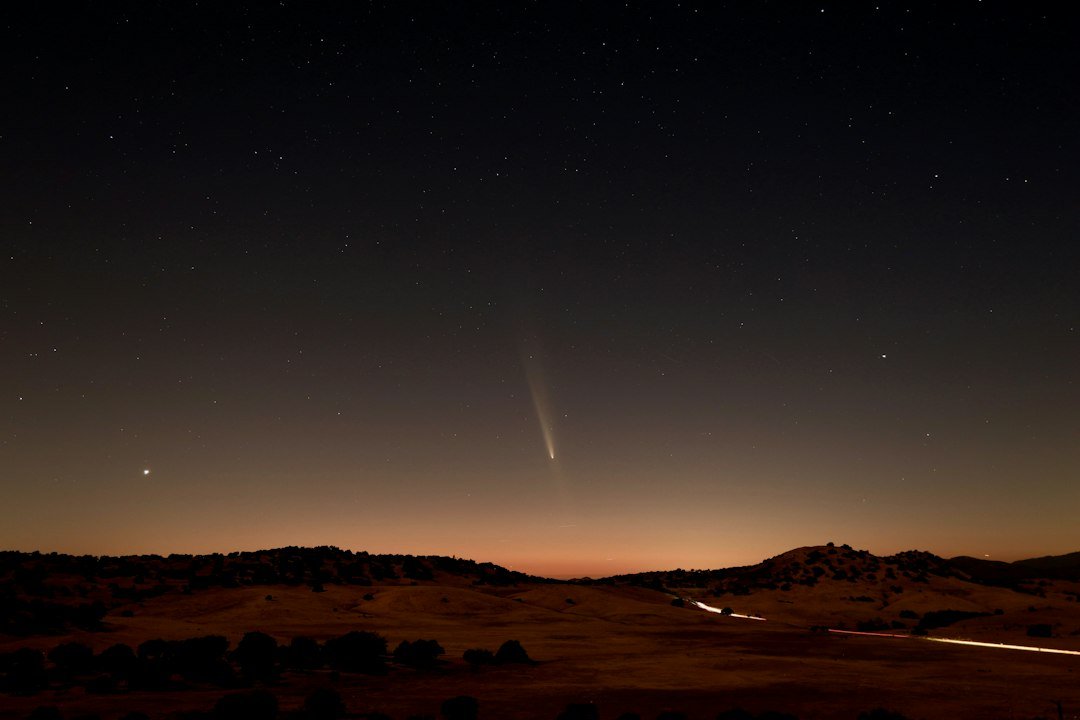
Featured image: comet C/2023 A3 photographed by Forsaken Films / Unsplash; illustrative, not the early Earth.
Question. Investigate. Reconsider.