APEP BAR | HIDDEN HISTORY | October 13, 2026
A royal island disappears beneath the Mediterranean. Centuries later, archaeologists recover a small bronze ring engraved with one of the ancient world’s most celebrated landmarks. History sometimes delivers better plot twists than fiction.
The Lighthouse of Alexandria was once one of the Seven Wonders of the Ancient World. It is long gone, but evidence of its place in everyday and official life is still surfacing—sometimes literally—from the sea.
Underwater archaeologists working in Alexandria’s ancient eastern harbor have uncovered a bronze signet ring engraved with a representation of the Pharos lighthouse. The research team describes it as the first known ring of its kind. The discovery was announced in early October 2026 by the European Institute for Underwater Archaeology, which is excavating with Egyptian partners.
Why was it beneath the water?
The ring was recovered at Antirhodos, a now-submerged island that formed part of the royal quarters of Alexandria’s Great Harbor. The area was a prestigious center of government and commerce in antiquity. Today, investigators work through underwater structures and artifacts to reconstruct the life of a waterfront that no longer looks as it once did.
A submerged palace is fascinating enough. But the engraving sharpens the story. The research team says the lighthouse on the ring resembles depictions seen on some second-century CE coins, offering a rare comparison between ancient images.
Did this ring belong to a lighthouse official?
That is an intriguing possibility, not an established identification of its owner.
Archaeologist Franck Goddio has suggested that the palace site contained administrative functions connected with the lighthouse. The ring’s findspot strengthens interest in that interpretation, but a single artifact does not tell us whose hand wore it, precisely when it was made, or what document it may have sealed.
Those are exactly the questions that make a small object historically important. A signet ring was more than jewelry: such objects could represent identity, authority or ownership. Context may ultimately reveal more than the engraving alone.
A city hiding in plain sight
Alexandria’s coastline is a reminder that the ground beneath cities is not always stable through the centuries. Buildings collapse, shorelines shift, and urban landscapes can disappear from view without disappearing from history.
What is being recovered here is not proof of a mythical lost civilization. It is more extraordinary in a different way: tangible evidence that a documented ancient world still has details left to uncover.
The Apep Bar question
We often imagine history as a completed story, with everything important already labeled in a museum. Yet a modest bronze ring can reopen a question about how a monument was represented, managed and remembered.
If a single object can change what we know about Alexandria’s royal harbor, what else lies in the underwater streets we have not fully explored?
Question. Investigate. Reconsider.
Sources: Franck Goddio / IEASM — field announcement (Oct. 7, 2026) · Smithsonian Magazine — reporting and context (Oct. 9, 2026).
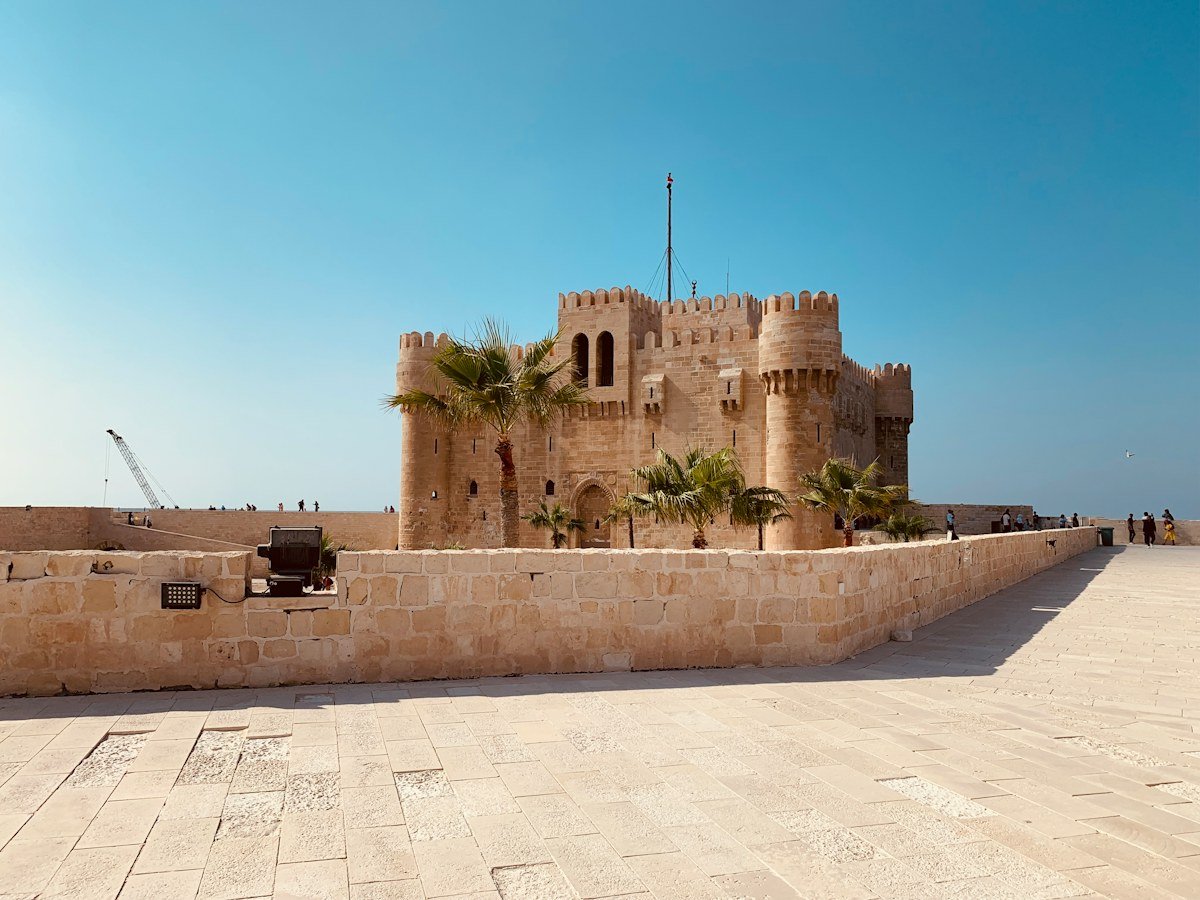
Image note: Present-day Citadel of Qaitbay at the site of the historic lighthouse; not a photograph of the excavated ring. Photo: Farah Samy / Unsplash.