NEWS & ANALYSIS | November 15, 2026. What happens when a company sends a machine to decide which humans deserve to meet its humans? For some jobseekers, the answer is simple: they stop applying.
A TechRadar report published November 15 describes growing resistance to AI-led job interviews. In research attributed to Careerminds UK, 69.1% of 1,000 full-time UK workers said they would feel uneasy about a first interview conducted by AI rather than a person. Some 11.2% said they would withdraw, while 33.4% would proceed despite feeling uncomfortable and 24.5% said their decision would depend on the position or pay.
Yet the story has an unexpected complication. A separate randomized field experiment involving approximately 70,000 applicants for customer-service jobs found that candidates interviewed by an AI voice agent were more likely to receive an offer, start work and remain employed than those interviewed by human recruiters. A machine interviewer can repel people in one setting and improve measurable outcomes in another. The distinction matters more than either headline alone.
Seven in ten uneasy does not mean seven in ten refuse
The Careerminds findings, reported by The Global Recruiter, surveyed full-time workers in the United Kingdom about how they would react to an AI-run first interview. Only 30.9% said they would continue without hesitation. Of the 11.2% who would withdraw, 5.5% said definitely and 5.7% probably.
That is an important distinction between attitude and behavior. The survey asked about a hypothetical interview, not what every respondent actually did after receiving an invitation. Its population was employed, full-time UK workers; it does not represent every unemployed applicant or every country. Public reporting reviewed for this article did not provide the full underlying questionnaire, fieldwork dates or weighting details, limiting independent assessment of the survey method.
The story also should not be reduced to generational resistance to technology. Careerminds reported that baby boomers were more likely than Gen Z workers to say they would withdraw, but a dislike of an impersonal hiring process is not proof that older applicants lack technical skills. It may reflect different expectations, different opportunities or questions the survey cannot resolve.
Another survey suggests the real problem is undisclosed automation
In its 2026 Candidate AI Interview Report, recruiting software company Greenhouse surveyed 2,950 jobseekers across the United States, United Kingdom, Ireland, Germany and Australia. TechRadar reported that 47% of UK jobseekers surveyed had experienced an AI interview, while 30% said they had withdrawn from a hiring process involving one.
That 30% is not directly comparable with Careerminds’ 11.2%. The studies used different samples and asked different questions: one measured reported past withdrawal among jobseekers; the other measured stated intentions among full-time workers faced with a hypothetical scenario. Putting those percentages side by side without their denominators and wording can manufacture a contradiction.
Greenhouse’s own published findings identify a telling weakness: just 13% of UK candidates who completed an AI interview said they had been clearly told upfront that AI would be used. In the UK sample, 42% of candidates who had completed such an interview reported never hearing back. The company also found that candidates across markets were especially troubled by recorded interviews with no human contact, unclear assessment criteria and monitoring.
These are self-reported experiences from a hiring technology company’s survey, not an independent audit of all employers. Still, they raise a pointed question: is the revolt against machines, or against being assessed by a system candidates were never properly told about?
The 70,000-person counterexample: AI interviews can work better
A field experiment by Brian Jabarian and Luca Henkel, Voice AI in Firms, conducted with recruiting firm PSG Global Solutions, randomly assigned about 70,000 customer-service applicants to human or voice-AI interview conditions, with a choice condition also studied. As Chicago Booth Review explains, human recruiters reviewed candidates and made the final hiring decisions, regardless of who conducted the initial conversation.
Compared with those interviewed by a human, AI-interviewed candidates were reported to be 12% more likely to receive a job offer, 18% more likely to start work and 17% more likely to remain employed after 30 days. Among applicants offered a choice, around 80% selected the voice-AI interview. The authors suggest the tool’s availability, consistency and capacity to elicit relevant answers may be part of the explanation.
This is more informative about actual outcomes than a survey of hypothetical preferences, but its scope is narrower than the broad AI-hiring debate. The results arose in high-volume customer-service recruitment, using a voice agent, not necessarily the avatar-style, recorded and monitored interviews that frustrate other applicants. Human judgment remained in charge of final decisions. The experiment does not establish that every automated interviewer is unbiased, that every occupation benefits, or that replacing human decision-makers entirely is safe.
In other words, the most interesting finding is not that the surveys or experiment must be wrong. They may be describing genuinely different kinds of AI interviewing.
What the employer sees—and what the applicant does not
The attraction for employers is obvious: agents can be available outside office hours, ask consistent questions and handle large volumes without exhausting recruiters. But hiring is not just a sorting operation. It is also an exchange of information, in which applicants decide whether the organization deserves their time and labor.
When an AI system evaluates speech, word choice or recorded answers, applicants deserve to know what is being captured, retained, scored and shared. They should also know whether a recruiter can override an algorithmic recommendation, and how they can contest a mistake. A system that efficiently evaluates the people willing to use it may still miss those who opt out before being counted. That is a possible selection effect, not proof that the strongest candidates always leave.
Automated evaluation also has a potentially unequal burden. A candidate with several offers can turn down an inconvenient automated interview; an unemployed person facing imminent bills may not have that freedom. A separate Use.AI survey reported by TechRadar on November 8 found greater reported AI-interview withdrawal among employed jobseekers than unemployed ones, although that observational result cannot by itself explain each person’s motivation.
British regulators say speed cannot replace safeguards
The UK’s Information Commissioner’s Office has gone beyond general warnings. Its recruitment oversight report, based on discussions with more than 30 employers, found that some employers relying on solely automated recruitment decisions were not applying the safeguards their practices required. The regulator called for clearer disclosures, meaningful human involvement and more rigorous fairness monitoring.
The ICO’s guidance for jobseekers explains rights concerning certain solely automated decisions, including transparency and the ability to challenge a decision and request human review. These protections depend on the decision-making circumstances; merely using AI somewhere in an interview does not automatically mean the entire outcome was solely automated. Rules also differ outside the UK.
There is a broader trust problem too. The Chartered Management Institute reported in November research that 58% of surveyed UK hiring managers had suspected a candidate was using AI during online interviews. Employers want authentic applicants while increasingly offering applicants a nonhuman first encounter. Neither side appears eager to be the only human in the room.
The test AI hiring still needs to pass
For organizations deploying these systems, a credible test is not simply whether interviews cost less or whether an algorithm ranks candidates consistently. It is whether a properly disclosed AI option performs fairly across groups, whether applicants can choose a human alternative, whether decisions can be reviewed and whether new hires actually succeed on the job. Companies also need to count the candidates lost before the first automated question.
The evidence does not justify a blanket ban on AI interviews. Neither does it justify an uncritical rush to replace human contact. The better question is whether employers can show that a particular tool improves recruitment without hiding the rules or quietly narrowing who gets considered.
If a company cannot spare one human to explain how its AI is judging an applicant, what exactly is it telling that applicant about the people they would work for?
Watch: research on AI interview outcomes
Are AI interviews better? — Chicago Booth Review. A university research discussion with Brian Jabarian about the field experiment. Contextual research interview, not footage of the Careerminds survey or a recorded interview from the Greenhouse study.
Sources and further reading
- TechRadar, Craig Hale, November 15, 2026 — original report prompting this investigation.
- The Global Recruiter, November 12, 2026 — Careerminds UK survey figures and expert response.
- Greenhouse, 2026 Candidate AI Interview Report — survey across five countries, published by a hiring software vendor.
- Jabarian & Henkel, Voice AI in Firms: A Natural Field Experiment on Automated Job Interviews, working paper; see Chicago Booth’s accessible study summary.
- UK Information Commissioner’s Office — inquiry into automated recruitment and regulatory expectations.
- Chartered Management Institute, November 2, 2026 — managers’ views of candidates using AI.
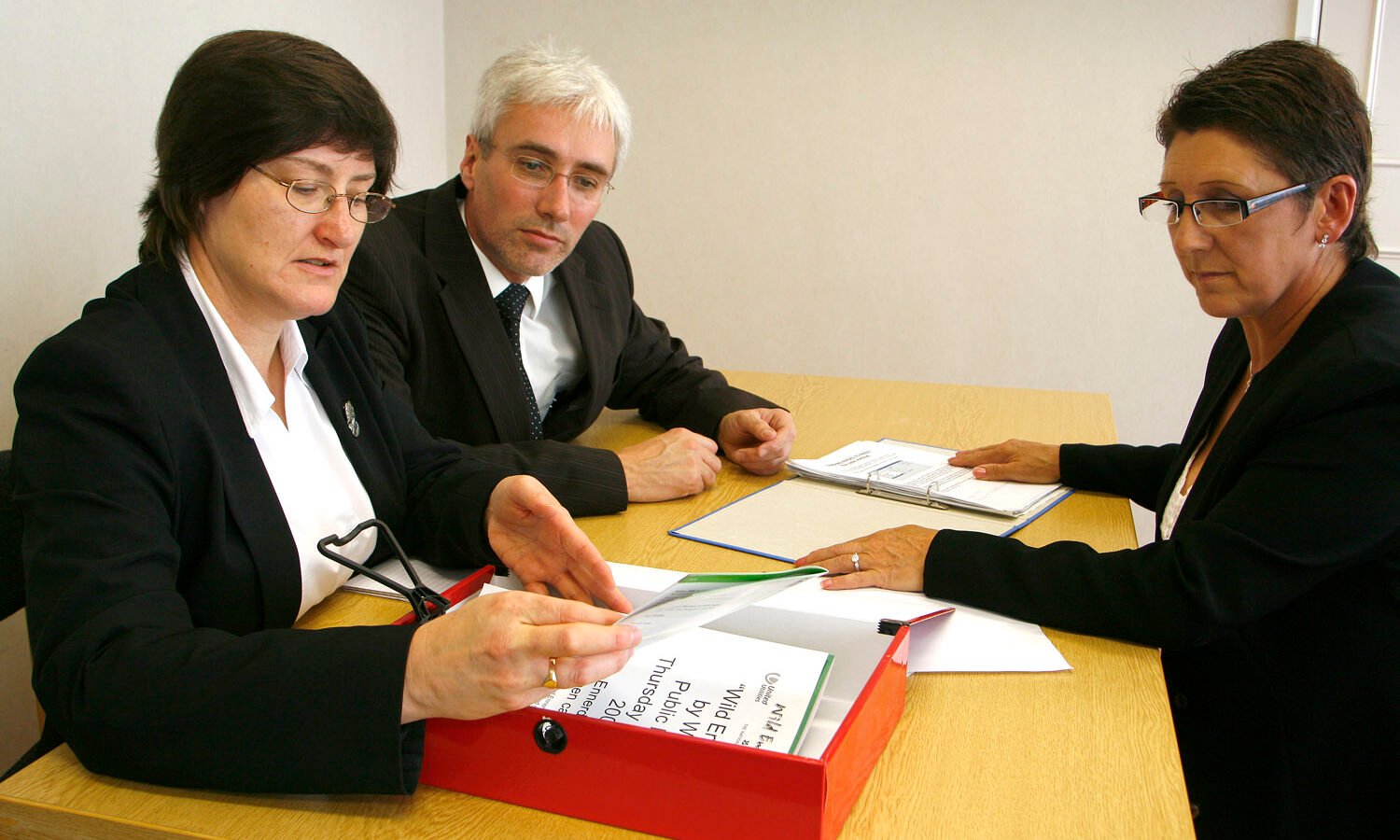
Featured-image credit: “Job interview” by Alan Cleaver, licensed under Creative Commons Attribution 2.0. Contextual photograph of an in-person job interview, not an AI-led interview; no alterations.
Related Apep Bar reading: Why Does AI Look White? The Racial Hierarchy Hiding in Machines—and in Us explores social bias around AI; Proton’s AI Push Sparks Security Backlash examines another workplace dispute about the costs of AI adoption.