The person on the video call looked familiar. The account sending the invitation was genuine. The meeting software looked normal. Yet, according to the FBI, the person onscreen was a recording, the meeting was a trap, and the suggested fix for a sound problem was malware. Investigators say a North Korea-linked operation built that deception into a recurring cryptocurrency theft scheme that took more than $400 million over roughly 18 months.
On November 12, 2026, the FBI and Justice Department announced they had disrupted cloud infrastructure supporting the campaign, which investigators call FaceStealer. The FBI says it seized more than 900 secretly recorded webcam videos used to impersonate prior victims. Those figures are findings announced by federal authorities, not an independently audited public tally of losses. The DOJ announcement and the FBI’s technical alert explain how the operation worked.
The scam began with someone you already trusted
This was not simply a fake celebrity asking for a crypto transfer. In the FBI FLASH advisory, AC-11226-MS, agents describe a chain reaction: an attacker compromises a first victim’s device and messaging account, secretly records that person’s webcam, and then uses the real account and familiar face to contact their colleagues. The attackers have reportedly hijacked Telegram, LinkedIn, Slack and Discord accounts.
An invitation might propose a routine catch-up, a collaboration, or an investment conversation. The target receives what appears to be a Zoom or Microsoft Teams link, sometimes after scheduling through a legitimate calendar service. But the link leads to an imitation meeting controlled by the attackers. Once inside, the target sees a prerecorded video of the person they know, sometimes alongside other seemingly familiar participants.
Then comes the pressure point: the target is told their microphone isn’t working. The fake meeting supplies an “update” or troubleshooting step. Following it can run malicious code, installing tools that steal session information, record keystrokes, capture screens or give attackers persistent access. Meanwhile, the victim’s own webcam footage may be captured for the next fake meeting. A familiar face becomes the bait for the next victim.
Not every fake face was a deepfake
The dramatic phrase “AI deepfake” risks concealing the technique that made this campaign unusually convincing. The FBI says most FaceStealer impersonations used real video recordings of people the targets knew, not fully synthetic faces. Its advisory says attackers have also begun making AI-generated videos of prominent crypto figures, but that genuine victim footage remained the dominant tactic. Reuters’ November 12 report separately described the same prerecorded-video approach.
The familiar account and stolen chat history are crucial. A message from an existing colleague with references to previous conversations can pass a test that a random phishing email would fail. This operation exploited relationships as much as software.
Why the FBI seized more than 900 webcam videos
The bureau says a federal warrant allowed agents to seize a library of more than 900 recordings. The published alert even includes redacted, blurred examples of victim video stills. Those files indicate the machinery used for impersonation; they do not, by themselves, establish that every recorded person lost funds. The government has not publicly provided a victim-by-victim accounting supporting the entire $400 million figure.
Importantly, the DOJ’s announcement describes the disruption of particular infrastructure, not the arrest of every participant or proof that the entire campaign has ended. The FBI attributes the scheme to North Korean state-sponsored actors associated with names including Sapphire Sleet, UNC1069 and BlueNoroff. The attribution is a U.S. government investigative judgment; the public documents do not disclose every underlying intelligence source or forensic step.
The software-supply-chain threat is larger than one wallet
The bureau says operators also sought access to open-source software maintainers. That shifts the risk from theft against one person to code distributed through tools used by many people. The FBI describes an attempt against a widely downloaded JavaScript library whose maintainer was lured into a fake Teams session. Investigators say attackers created malicious dependencies, but the attempt was detected before the malicious changes could become a much larger downstream compromise.
This warning matters because developers often hold credentials capable of publishing software updates. A stolen maintainer account could become a delivery route into systems far beyond the original victim. The alert reports attempts involving JavaScript package maintainers and Rust crates, although it does not substantiate that millions of users were compromised in this campaign.
Do not confuse FaceStealer with the $6.3 billion Binance hack
The November 12 DOJ release discussed two separate operations. In addition to FaceStealer’s more-than-$400-million toll, officials described a roughly $6.3 billion theft from Binance around October 29, attributed to a different North Korean hacking cluster referred to as TraderTraitor. Officials said government and private partners had frozen more than $2.7 billion connected to that separate theft, with court authorization to seize or restrain more than $1.2 billion. A freeze or restraint is not the same thing as final forfeiture or return to victims.
Apep Bar previously examined the $6.3 billion Binance breach and its North Korea attribution. The fresh detail here is not another estimate of that heist: it is the FBI’s account of a video-based impersonation pipeline. Combining the dollar amounts would mislead readers about what each investigation established.
What to do before the next “quick catch-up”
The FBI’s practical advice is unglamorous but specific: open the official meeting application yourself and join with a verified meeting code rather than trusting an unfamiliar web link; keep your camera off until you can independently speak with the purported contact; never paste terminal commands or run scripts to “repair” meeting audio; and confirm unusual invitations through a second communication channel. Enable multifactor authentication and login alerts for messaging accounts.
For people holding cryptocurrency, the bureau also advises keeping recovery phrases and private keys off internet-connected devices. If compromise is suspected, use a clean device to secure accounts and move assets to a new wallet with new seed phrases, warn contacts who may be targeted, alert relevant employers or maintainers, and file a report at IC3.gov using the term “FaceStealer.”
Watch: the FBI explains the actual scheme
Official video: FBI Los Angeles agent Jeremy Robertson explains FaceStealer in the bureau’s own video. This is an official law-enforcement explanation, not footage of a particular fraudulent meeting; it includes an accessible transcript on the FBI site.

The unanswered question
The authorities have exposed an especially efficient loop: compromise a trusted person, borrow their face, lure the next contact, then repeat. What remains unresolved in the public record is how much of the network survived the infrastructure seizure, and how many victims still do not know their footage or accounts were used. When a recognizable face and a real account can both be stolen, what counts as proof that the person on the call is actually there?
Primary records and further reading
- FBI FLASH, Nov. 12, 2026 — full FaceStealer technical advisory (PDF)
- Justice Department, Nov. 12, 2026 — infrastructure disruption and separate Binance asset seizures
- FBI FaceStealer information hub
- Reuters, Nov. 12, 2026 — independent reporting on the FBI disclosure
- Benzinga — the report that prompted this investigation
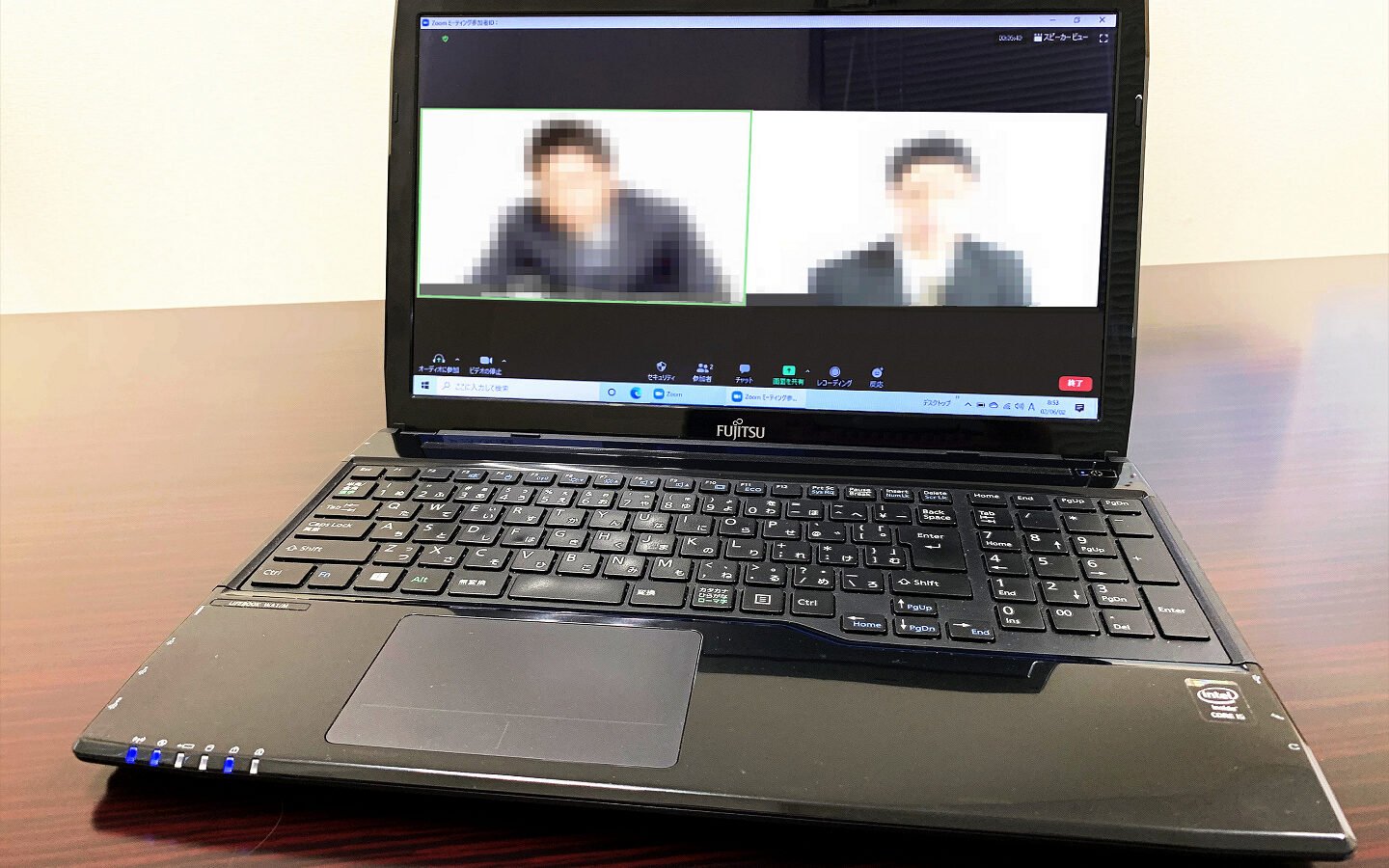
Featured photograph: “Video Conference Using Laptop” by Project Kei, licensed under CC BY-SA 4.0. This is a real photograph illustrating a video conference, not an image of the FaceStealer attack.