The future of driving has arrived with no steering wheel, no pedals—and one remarkably short public letter. When federal regulators asked Tesla to explain how its Cybercab meets U.S. vehicle safety rules, the company submitted material by its October 30, 2026 deadline. The publicly released cover letter, however, contained a single sentence: “The entirety of this file is confidential business information.”
The line is real. It appears in Tesla’s October 30 letter on the National Highway Traffic Safety Administration (NHTSA) document server. But there is an important distinction between a withheld public filing and a refusal to cooperate: Tesla did submit answers to the agency and sought confidential treatment for them. What the public cannot see is the reasoning behind Tesla’s certification of a vehicle designed to dispense with controls that federal safety standards have long assumed would exist.
The audit began when the Cybercab started carrying passengers
NHTSA opened its Cybercab self-certification audit on September 3, the day Tesla began commercial Cybercab service in Austin, Texas. The agency announced the inquiry publicly on September 4, explaining that manufacturers must certify compliance with applicable Federal Motor Vehicle Safety Standards (FMVSS), subject to federal oversight.
That process matters. NHTSA does not ordinarily issue an advance safety endorsement for every new car. Manufacturers self-certify, and regulators can audit the evidence. A September 10 Special Order, AQ26002, sought sworn answers to 21 sets of questions about the Cybercab and the methods Tesla used to determine compliance.
The original deadline was September 30. Tesla requested eight additional weeks, and NHTSA granted a 30-day extension instead, making the response due October 30. The public record shows Tesla met that revised date and claimed confidentiality for key technical materials. Whether the regulator ultimately accepts the company’s arguments is a different question.
The brake-pedal problem is not a punchline
Question 19 of the Special Order zeroes in on FMVSS No. 135, section S5.3.1, which states that service brakes must be activated by a foot control. Tesla describes Cybercab as a purpose-built driverless two-seater without a steering wheel; its own passenger information confirms the steering-wheel-free design.
A car can brake automatically and still raise a regulatory question about an equipment rule written around a human-operated pedal. NHTSA specifically asked Tesla to explain how it determined that a Cybercab without a conventional foot-operated brake complies. The issue is legal and technical certification, not an allegation that the car cannot stop.
The agency also asked about self-canceling turn signals, rearview mirrors, vehicle controls and warning indicators. Questions 5 through 7 probe a particularly interesting possibility: were temporary human controls used to establish compliance, and if so, were they later removed? Those are questions in an investigation, not findings that Tesla did any such thing.
Question 8: the proof the public cannot inspect
Question 8 asks Tesla to identify, standard by standard, how it determined compliance: engineering analyses, physical testing, computer simulations, or some combination. In an October 30 confidentiality notice, NHTSA recorded that the remaining documents responding to this question were covered by a request to withhold each document in its entirety.
The agency’s publicly available material also includes a Cybercab first-responder interaction plan. That explains how emergency crews may interact with or move the vehicle, and it distinguishes ordinary driverless Cybercabs from engineering or test vehicles fitted with human controls. It does not publicly settle the braking, mirror, or certification questions.
There can be legitimate reasons for a vehicle manufacturer to protect sensitive engineering details, supplier information or proprietary testing methods. Federal confidentiality rules provide a process for requesting protection; they do not make every claim automatically final. The public-interest tension is plain: how much of the reasoning used to declare a roadgoing vehicle legal should the public be allowed to examine?
Why Tesla’s route differs from seeking an exemption
Question 21 asks how the Cybercab complies without an exemption under 49 CFR Part 555, a regulatory pathway manufacturers may seek for limited vehicles that do not satisfy every otherwise applicable standard. Rather than announcing such an exemption, Tesla has maintained that its Cybercab meets the standards applicable to it. The legal basis for that judgment is precisely what regulators requested.
In its own September statement, NHTSA emphasized that it supports automated-vehicle innovation while existing rules remain in force during federal modernization efforts. This is not simply a clash between futuristic design and antiquated paperwork: it is a test of how existing rules, exemptions and public accountability function when the human driver disappears.
What is established—and what is not
Documented: NHTSA opened audit AQ26002; it demanded sworn information in 21 requests; Tesla submitted a public cover letter dated October 30 claiming its entire contents confidential; and NHTSA’s file notes a blanket confidentiality request for materials responsive to Question 8.
Not established by those records: that Tesla failed to provide regulators with substantive answers, that the agency accepted its reasoning, that NHTSA finally granted every confidentiality claim, or that the Cybercab has been found noncompliant. CarScoops and Electrek highlighted the unusually terse public disclosure, but the underlying NHTSA records are the central evidence.
A car that does not need a driver may be an engineering leap. Whether its maker can keep the basis for its compliance with driver-era safety rules entirely out of public view is a separate test—this one for regulators and transparency. When the steering wheel disappears, who gets to see the evidence that the rules are still being followed?
Watch: The “Sassy Tesla” short
Watch the reader-supplied YouTube Short on Tesla’s NHTSA confidentiality filing. This is commentary about the documents, not footage from the federal audit or independent verification of the vehicle’s safety performance.
Primary documents and further reading
- Tesla’s October 30, 2026 public cover letter (NHTSA PDF)
- NHTSA’s Question 8 confidentiality notice (PDF)
- NHTSA September 10 Special Order, 21 information requests (PDF)
- NHTSA September 4 audit announcement
- Federal braking standard, 49 CFR § 571.135
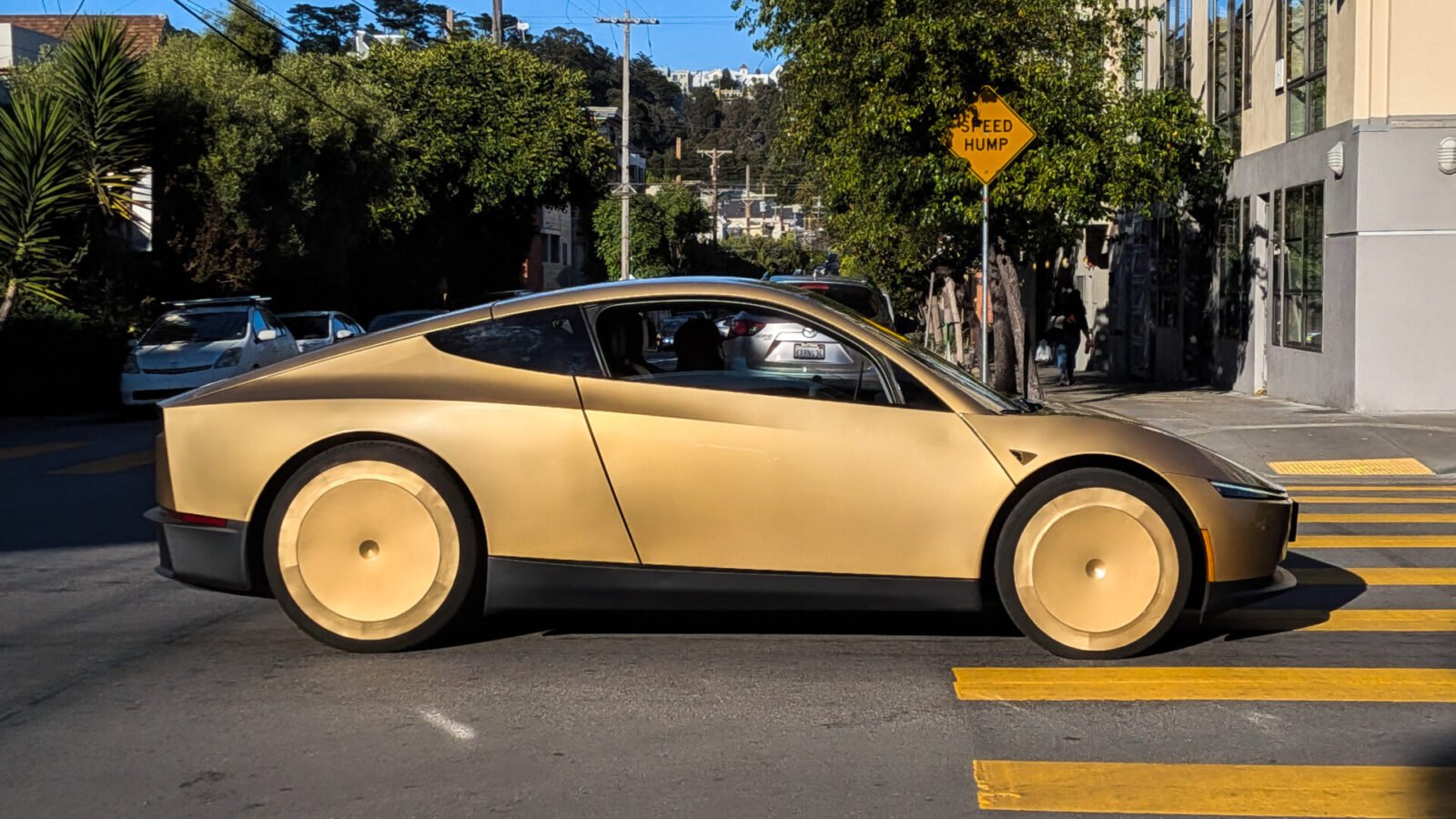
Featured image: A Tesla Cybercab on Harrison Street in San Francisco, photographed by 9yz on June 12, 2026. Original photograph, licensed under CC BY 4.0. This is documentary vehicle imagery, not a photograph of the NHTSA submission.