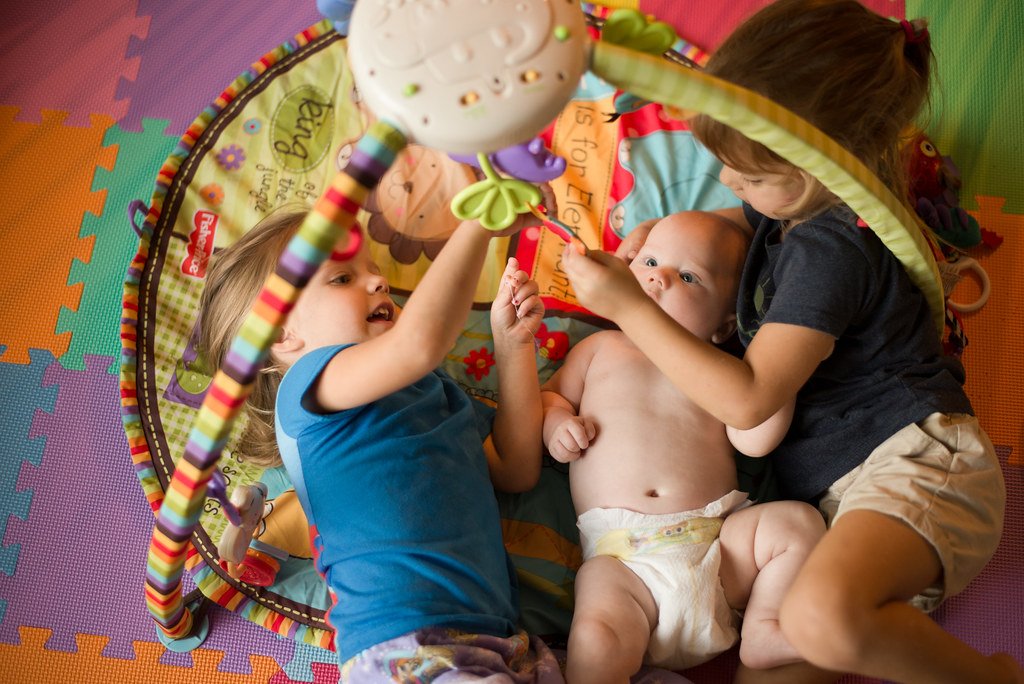
Two children born 18 months apart might grow up as inseparable playmates—or spend years fighting over the same toy. Two born a decade apart might scarcely share a childhood, yet become close friends as adults. That is the trouble with the idea of a “perfect” sibling age gap: it sounds precise, but human relationships rarely respect a calendar.
There is real science behind birth spacing. There is also research on sibling conflict, educational outcomes and family resources. What the evidence does not offer is a universal number of years that guarantees healthier, happier or closer children. The distinction matters because popular advice often blends two different questions: how long to wait before another pregnancy, and how far apart siblings should be for the sake of their relationship.
First, the medical distinction almost everyone misses
The American College of Obstetricians and Gynecologists (ACOG) advises avoiding a new pregnancy less than six months after a birth and discussing the risks and benefits of conceiving again before 18 months. Its guidance is about the birth-to-next-conception interval, not the age difference between two children at their birthdays. An 18-month wait before conception would generally produce an age gap of roughly 27 months if the subsequent pregnancy reaches term.
The risks of a very short interval can include preterm birth and low birth weight, with particular concerns after a previous cesarean delivery. ACOG also notes that much of the evidence is observational, that causal explanations remain debated for some outcomes, and that clinical advice should account for age, fertility, pregnancy history and individual circumstances. No parent should translate a population-level recommendation into a personal medical verdict.
Close together: shared milestones, shared competition
When siblings are less than about two years apart, their lives can overlap intensely: similar toys, routines, play interests and eventually school-age experiences. But the same overlap can mean two children simultaneously need help with sleep, emotional regulation, supervision and daily care. Parents may have less one-on-one time during a particularly demanding stage.
A small observational study published in Child Development in 1983 compared sibling pairs spaced one to two years apart with pairs spaced three to four years apart. In that sample of 73 children, those interacting with a closer-aged sibling showed more aggression, while those with wider-spaced siblings showed more positive behavior and affection. That is interesting—not a law of sibling psychology. The sample was small, and relationships can change over time. Read the study.
Conversely, closeness in age does not automatically mean cognitive harm. A 2017 study in the Journal of Marriage and Family, drawing on a U.S. birth cohort and comparing children’s development before and after a sibling arrived, found no statistically significant reduction in early cognitive development attributable to the addition of a sibling—even with relatively close spacing. That finding challenges a simplistic claim that a new baby inevitably dilutes an older child’s intellectual development.
Two to four years: the tempting compromise
This spacing can mean the older child is moving toward greater independence when a baby arrives, while the pair may still share enough developmental stages to play together later. That can ease some logistical pressures. But a three-year-old and a newborn are not necessarily easy roommates, and jealousy or conflict cannot be predicted from a birth certificate.
There is a more technical educational result worth examining. Economists Kasey Buckles and Elizabeth Munnich, using U.S. longitudinal surveys and an instrumental-variables approach built around variation in birth spacing associated with miscarriages, reported in 2012 that each additional year of sibling spacing was associated with a roughly 0.17-standard-deviation improvement in test scores for older siblings in their preferred causal estimates. They did not find a comparable causal effect for younger siblings. One study of test scores is not proof that every family should delay a birth; its result depends on its sample, assumptions and methodology, and it does not measure whether the children eventually like each other.
Five years or more: less direct competition, a different childhood
With a larger gap, siblings may be in different developmental worlds. A school-age child might not want to play a toddler’s games, but they might enjoy showing a younger sibling how to read, ride a bicycle or navigate school. Parents may find it easier to give an infant individualized attention when the older child has established routines. Yet the schedule can stretch across very different activities, and the children may not have many shared peers or memories.
It is important not to turn that older-child advantage into an obligation. An older sibling can choose to help, but should not be assigned a standing substitute-parent role. Every child still needs privacy, friendships, and the freedom to be a child at their own stage.
What a long-term study actually found
A longitudinal study tracking sibling relationships from roughly ages seven to 30, based on 201 predominantly White, working- and middle-class U.S. families, offers a different perspective. Across the sample, sibling intimacy tended to dip around early adolescence, rise through the mid-20s and then level off; conflict generally declined as siblings grew older. The patterns differed across family and sibling characteristics.
The researchers also found associations between more positive sibling relationships and qualities such as expressiveness and parental warmth. Importantly, this is evidence about patterns and correlations in a particular sample, not a demonstration that any single parental behavior or age gap causes adult closeness. But it points toward something parents can actually influence: how children are treated, supported and helped to navigate conflict.
The age gap is a variable—not a destiny
The biggest trap in sibling-spacing advice is treating families as interchangeable. Temperament, household finances, childcare access, health, fertility, work schedules, parental relationships and stressful life events all shape what a given gap feels like. And spacing is often not fully chosen: infertility, pregnancy loss, adoption and blended families can produce age differences that no planning spreadsheet predicted.
The American Academy of Pediatrics emphasizes practical habits over an ideal number: make room for shared activities, give individual attention to each child, respect differences in age and maturity, and intervene calmly when conflicts threaten physical or emotional well-being. The point is not to eliminate disagreement. It is to teach children how to handle it without harming one another.
Parents can also avoid comparisons that trap children in permanent roles—the “responsible eldest,” the “spoiled baby,” the “difficult middle child.” Those labels are more likely to narrow a child’s identity than explain it. Our earlier report on harsh parenting and adolescents’ beliefs explored a related question: how parental responses can affect developmental outcomes.
So what is the best gap?
There is no honest research-backed answer that fits every household. Very short pregnancy intervals raise legitimate medical questions, while the developmental and social trade-offs of sibling age gaps are more complicated. A calendar can tell parents what challenges are likely to overlap. It cannot tell them whether two people will become friends.
Perhaps the better question is not “How many years apart should children be?” but “What support, time, health and stability can this family offer each child—and how can the siblings be helped to know one another as people?”
Sources and further reading
- ACOG: Interpregnancy Care — professional guidance on medical timing and its limitations.
- Buckles and Munnich (2012), Birth Spacing and Sibling Outcomes — educational outcomes analysis.
- Workman (2017), Sibling Additions, Resource Dilution, and Cognitive Development During Early Childhood — U.S. cohort analysis.
- McHale and colleagues, Patterns and Correlates of Changes in Sibling Intimacy and Conflict — longitudinal sibling relationships.
- American Academy of Pediatrics: Sibling Relationships — practical family guidance, updated April 2026.
- AAP Healthy Children Podcast, Episode 58 — researcher discussion of sibling rivalry and age gaps (audio companion).
Featured photograph: “Sisters helping Baby Brother Play” by donnierayjones, CC BY 2.0. Documentary family photograph used illustratively; the children pictured are not subjects of the cited research. This article is general information, not individualized medical advice.