HIDDEN HISTORY / INVESTIGATIONS — OCTOBER 26, 2026. Imagine being told that the future of American medicine depends on closing weaker medical schools. Now imagine that the institutions most vulnerable to closure are the ones training physicians for communities that other schools routinely exclude. In 1910, the publication of the Flexner Report helped set that contradiction into motion—and Black medical education is still living with its consequences.
Today, a new medical school planned by Xavier University of Louisiana and Ochsner Health in New Orleans is being hailed as a historic expansion of opportunities for aspiring doctors. The city has a poignant connection to that story: it once housed Flint Medical College, one of five historically Black medical schools that closed following the wave of reforms associated with the Flexner Report.
1. Before 1910: seven Black medical schools and a segregated profession
By 1910, seven medical schools were serving Black students in the United States. Their significance cannot be measured only by the number of graduates. At a time when segregation and discrimination restricted admission to many other schools, these institutions created rare pathways to becoming a physician and caring for patients denied equitable access to hospitals and medical services.
The schools identified in historical accounts include Howard University College of Medicine in Washington, D.C.; Meharry Medical College in Nashville; Leonard Medical School at Shaw University in Raleigh; Flint Medical College in New Orleans; Knoxville Medical College in Tennessee; the University of West Tennessee College of Medicine and Surgery; and Louisville National Medical College in Kentucky. Institutional histories differ on precise final operating dates, and the seven-school grouping reflects the period immediately surrounding the report rather than seven institutions disappearing on one day.
2. The report that transformed American medical education
Abraham Flexner, an educator commissioned by the Carnegie Foundation for the Advancement of Teaching, examined medical schools across the United States and Canada. His 1910 report, Medical Education in the United States and Canada, argued for stronger scientific instruction, better laboratory facilities, meaningful clinical training, and more consistent educational standards.
Some schools were plainly under-resourced and provided uneven instruction. Reformers had legitimate concerns about whether graduates were prepared to care safely for patients. Better medical education was a defensible goal. But Flexner’s framework also assumed that institutions could access laboratories, endowments, teaching hospitals, and philanthropic support on terms that Jim Crow segregation made profoundly unequal.
The report itself did not have legal authority to close schools. It was not a federal order and did not instantaneously shut down five Black institutions. Its influence came through accreditation, philanthropic funding priorities, professional opinion, state licensing requirements, and a reform movement already changing medicine. The resulting barriers proved devastating to schools operating with fewer resources and restricted access to clinical training.
3. What Flexner said about Black doctors
Flexner’s assessment was marked by the racial hierarchy of his era. He recommended that medical education for Black Americans be concentrated at Howard and Meharry rather than distributed across the seven schools. His discussion steered Black physicians toward serving Black communities and emphasized public health and sanitation. That limiting vision should be recognized alongside the report’s general push for stronger science.
The problem was not simply that the report demanded more rigorous training. The system furnished unequal resources for meeting those demands while constraining the roles Black physicians were expected to fill. The combination magnified the consequences of school closures for the profession and for communities needing care.
4. Five schools disappear; two institutions endure
Over the following years, five of the seven historically Black medical schools closed, leaving Howard and Meharry as the enduring pillars of Black medical education for much of the twentieth century. Individual closures involved distinct institutional circumstances and schedules. It would be historically misleading to attribute every school’s fate solely to one published report without examining local finances, accreditation, admissions, hospital arrangements, and state licensing rules.
Yet the broad pattern is difficult to dismiss: a reform movement that promised higher quality medical care also substantially narrowed the number of institutions educating Black physicians. For students excluded from predominantly white schools, a closed campus was not merely a lost educational option. It could mean that an entire medical career was no longer realistically available.
5. New Orleans remembers Flint Medical College
Flint Medical College was part of the institutional world around New Orleans’s historically Black education and health-care systems. Its closure in the post-Flexner era removed a local route into a profession already difficult for Black students to enter. A surviving building or medical-school name is not required for the historical consequences to persist: the loss affected students, faculty, communities and the future supply of physicians.
That is why the planned Xavier–Ochsner medical school has unusual symbolic weight. The New Orleans project arrives more than a century after Flint ceased operating in the same city. The historical connection is meaningful, but the new institution is not simply a reopening of Flint or a literal restoration of its predecessor.
6. What did the closures cost America?
A 2020 study in JAMA Network Open attempted to quantify the long-run effect of these closures. Its modeling suggested that the five shuttered historically Black medical schools might have produced approximately 27,773 additional Black physicians by 2019, with an estimated range reaching about 35,315 under other assumptions. These are counterfactual estimates—calculations of what might have happened had the institutions continued—not a list of documented people who definitely would have graduated.
Those projections require assumptions about enrollment growth, graduation, professional careers and the schools’ ability to survive changing economic conditions. They cannot prove an exact historical count. But they illustrate the possible scale of a century-long institutional loss.
Medical access is not determined by physician demographics alone. Hospitals, insurance coverage, geography, income, transportation and treatment quality matter. Nevertheless, medical education opportunities shape the number and distribution of clinicians, the professions available to underrepresented students, and potentially the care available in underserved communities.
7. Xavier University of Louisiana and Ochsner Health: a new chapter
Xavier University of Louisiana, a historically Black university known for preparing students for health professions, and Ochsner Health have established the Xavier Ochsner College of Medicine in New Orleans. The school has received preliminary accreditation from the Liaison Committee on Medical Education and is planning to welcome its inaugural class in 2027. Preliminary accreditation is a significant milestone, but it is not the same thing as enrolling students today or having a graduating class.
Descriptions of the planned program as America’s ‘fifth historically Black medical school’ depend on how institutions and affiliations are counted. Widely cited contemporary comparisons include Howard, Meharry, Morehouse School of Medicine and the Charles R. Drew University of Medicine and Science medical program, with Xavier–Ochsner expected to join the group. The point is not that Black physicians are trained only at HBCUs: Black medical students attend institutions throughout the country. It is that historically Black schools have played a distinctive role in creating access.
The new college has the opportunity to increase training capacity and strengthen links between medical education and health needs in Louisiana and the Gulf South. Whether it delivers those gains will depend on funding, student recruitment, teaching capacity, clinical partnerships, accreditation progress, and the experiences of its future students.

8. Why the historical correction matters
Calling the Flexner Report ‘the report that shut down Black medical schools’ captures an important influence but compresses a complicated history into a single cause. A more precise account asks: Who could finance the new requirements? Which medical schools had access to the necessary hospitals? Who controlled licensing? Which schools benefited from major philanthropic grants? And what happened to prospective Black students after local schools disappeared?
There was real need for higher standards. There was also a profoundly unequal environment for fulfilling them. Recognizing both is not an attempt to erase responsibility. It is a way of identifying the institutional decisions and financing patterns that transformed reforms into unequal opportunities.
9. From historical loss to present-day responsibility
The most useful measure of progress will not be how inspiring the new school’s opening announcement sounds. It will be how many students can afford to attend, how well they are trained, where they practice, whether community health needs are met, and whether the institution is supported strongly enough to last for generations.
Educational opportunity does not begin when someone submits a medical school application. It begins with schools, science instruction, mentoring, financial resources, exposure to health careers and the prospect that an investment in years of training will be attainable. Structural losses can reverberate long after the institutions themselves disappear.
Apep Bar’s question
If reforming medical education was supposed to improve American health, what should we learn from a reform era that helped leave so few pathways open for Black physicians—and what would it take to build opportunities that last another hundred years?
Question. Investigate. Reconsider.
Sources and further reading
Reader-supplied video, ‘The 1910 Report That Shut Down Black Medical Schools’ · Abraham Flexner, Medical Education in the United States and Canada (1910), full report · Carnegie Foundation: history of the Flexner Report · JAMA Network Open (2020): historical and modeled loss of Black physicians · Xavier University of Louisiana · Xavier Ochsner College of Medicine: accreditation and planned opening.
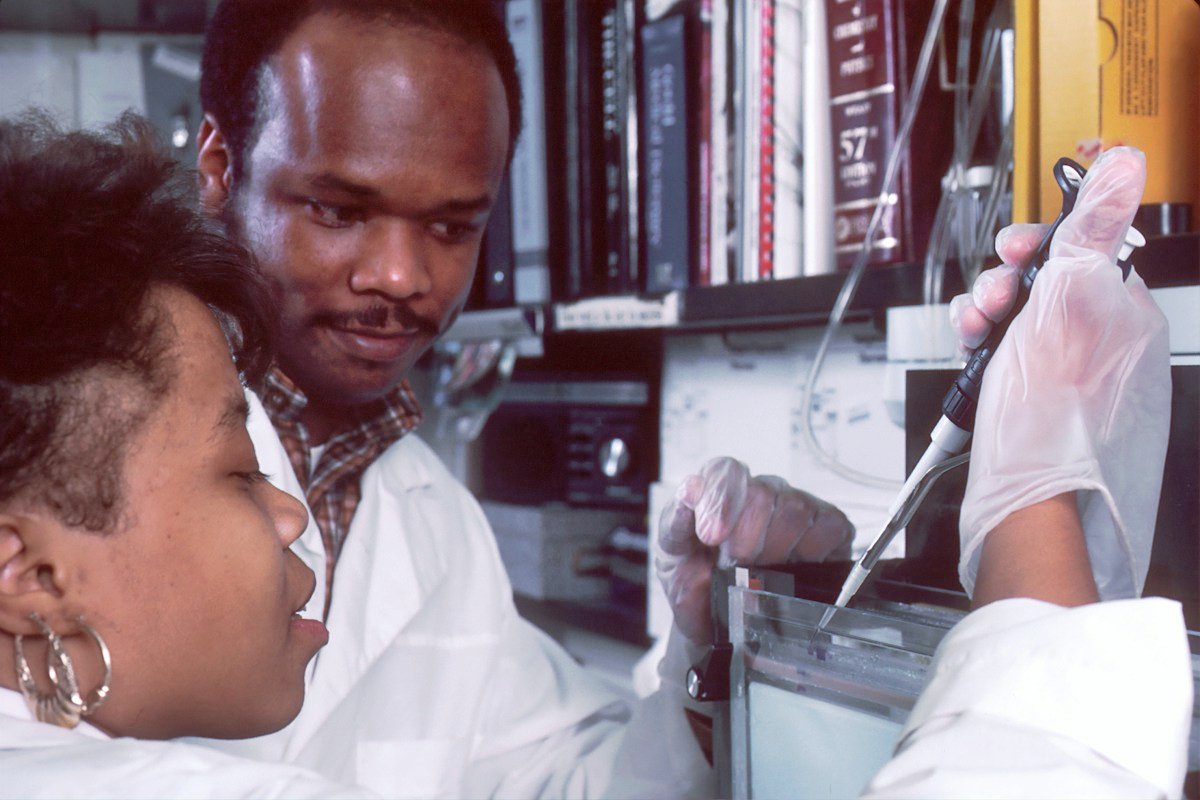
Editorial note: The supplied short-video transcript could not be independently reproduced, so this is an original, source-informed history rather than a quotation of the video. The loss-of-physicians figures are modeled estimates. Photographs are contemporary illustrative images and do not depict the historical schools or their students. Featured image: National Cancer Institute / Unsplash; in-article image: Nappy / Unsplash.