A commercial ship slowly crossing the Pacific was supposedly searching for minerals on the ocean floor. That was the public explanation. The real operation, acknowledged in declassified CIA histories, was far more audacious: retrieve a sunken Soviet ballistic-missile submarine without Moscow knowing.
Welcome to Project AZORIAN, a Cold War story that barely needs fictional embellishment.

A submarine vanishes in 1968
In 1968, the Soviet submarine K-129 disappeared in the Pacific. American intelligence located its wreck and saw a rare chance to examine Soviet military technology. Recovering a wreck from thousands of feet below the surface was an extreme engineering problem. Doing it covertly required a convincing public disguise.
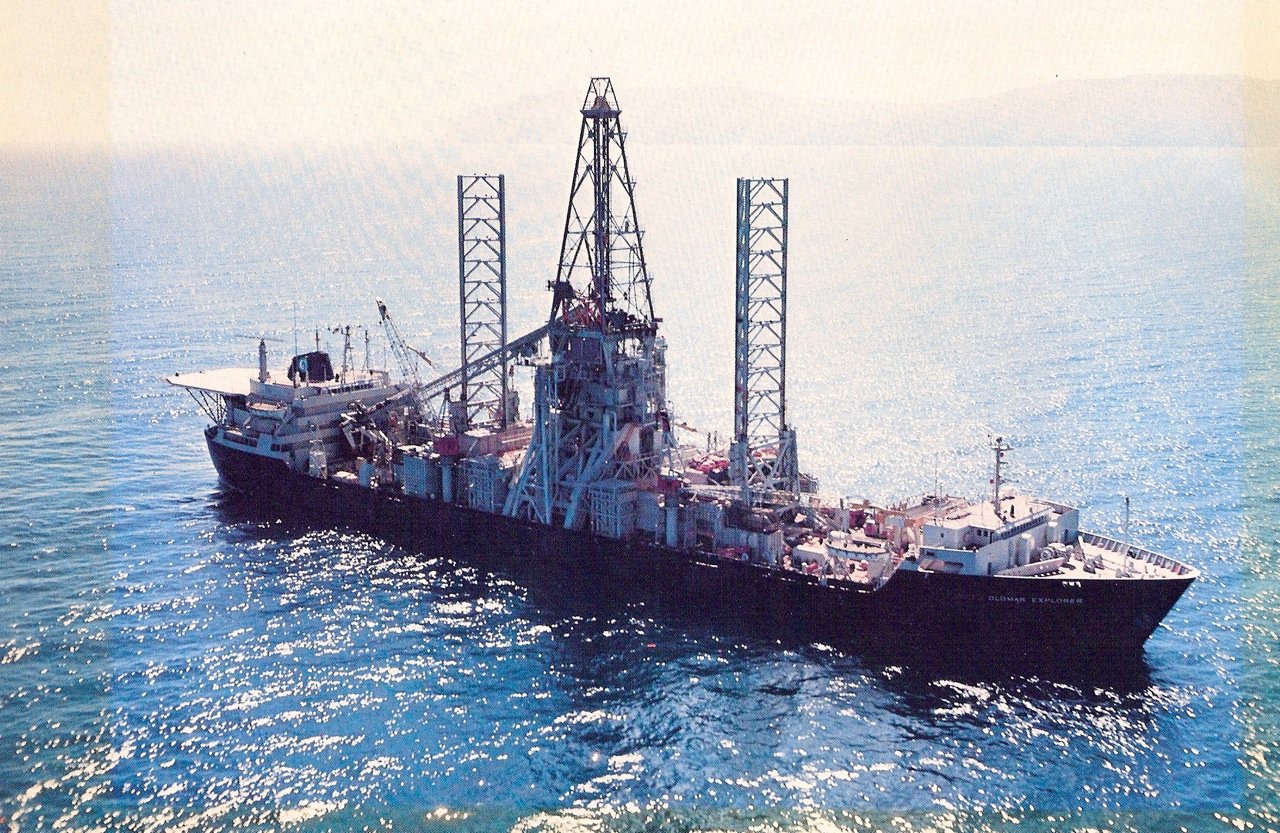
According to the CIA, the purpose-built Hughes Glomar Explorer presented itself as a deep-sea mining venture linked to billionaire Howard Hughes. Under the cover story, the vessel was equipped for an actual covert recovery. A vast capture system was designed to seize part of the submarine, lift it through deep water and bring it inside the ship.
July 1974: the lift almost works
The Glomar arrived near the recovery site on July 4, 1974. Its crew carried out an extraordinary lifting operation while curious Soviet ships came near enough to observe activity at sea. During the ascent, the submarine section broke apart; a significant portion fell back to the seabed. The Americans still recovered a surviving section, according to CIA accounts.
Among the recovered remains were six Soviet sailors. The agency says they received a burial at sea, and a film of the ceremony was later given to Russia. The mission therefore contains two very different stories: an intelligence-gathering operation and the deaths of sailors whose families were left with decades of uncertainty.

A break-in helped expose the secret
The CIA recounts that a 1974 burglary at a Hughes-related office exposed paperwork linking the business to the operation. Reporters began chasing the story. The Los Angeles Times published a report in February 1975, and nationally syndicated reporting followed in March. With the cover compromised, plans for another recovery were abandoned.
The incident also gave enduring fame to the so-called Glomar response: the government’s formula of neither confirming nor denying whether certain records exist. The National Security Archive at George Washington University has published declassified files that illuminate the operation and its aftermath.
Successful espionage, or an unfinished heist?
The CIA calls Azorian a major technical and intelligence achievement despite admitting the retrieval was incomplete. Outsiders cannot independently measure the full intelligence payoff because parts of the record remain unavailable. The lesson is not that every rumor is true. It is that governments sometimes do undertake operations so elaborate they sound implausible—until the documents emerge.
What other stories dismissed as impossible may one day be revealed through ordinary records requests?
Sources and further reading
- CIA: The Exposing of Project AZORIAN
- CIA Museum: Project AZORIAN
- National Security Archive: Declassified History of the Glomar Explorer
Editorial note: The sources distinguish documented evidence from hypotheses. Stock photographs are illustrative and are not presented as pictures of the reported phenomena or historical events.