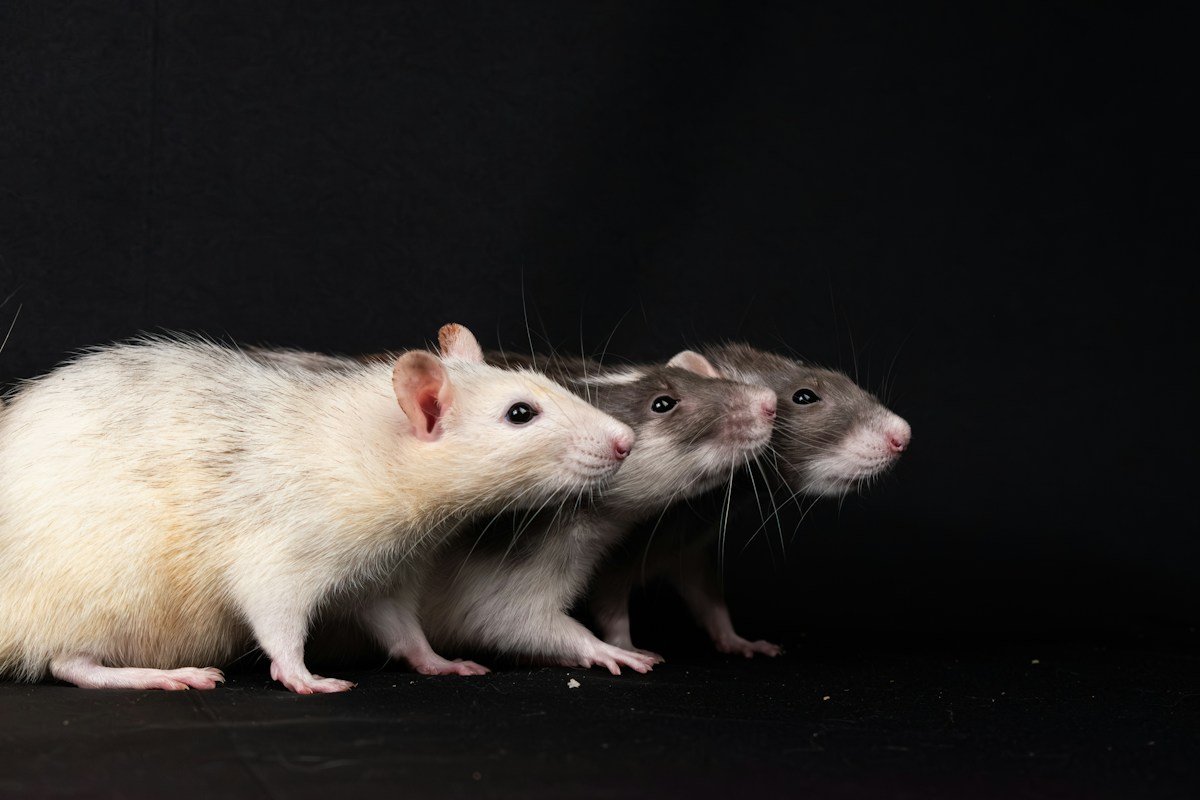
ALTERNATIVE SCIENCE / INVESTIGATIONS — OCTOBER 28, 2026. We call someone a ‘rat’ when we think they are selfish or disloyal. Then a group of scientists put real rats in a laboratory and found an unexpected pattern: some of them learned to free a trapped companion, even when a tempting reward was nearby. The research is real; the deeper question is how confidently a scientist can move from a helpful action to an invisible emotion.
The rat who refused to walk away
In a laboratory, one rat was trapped inside a transparent restrainer while another was free to move around. The animal outside the enclosure could ignore its companion, investigate the apparatus, or learn how to open it. In a 2011 experiment at the University of Chicago, many rats eventually learned to release the trapped animal. The discovery challenged an entrenched stereotype: rodents might respond to another animal’s distress with active helping, not just curiosity.
Who conducted the experiment?
The landmark paper, “Empathy and Pro-Social Behavior in Rats,” was authored by Inbal Ben-Ami Bartal, Jean Decety and Peggy Mason and published in Science on December 9, 2011. Bartal led work that combined behavioral testing with a question more often associated with human psychology: when one individual sees another in distress, can the observer be moved to intervene? The video’s title refers to a woman proving rat empathy, but its spoken transcript was not independently retrievable; the research and authorship are verified from the original publication.
How the rescue test worked
Pairs of rats were first housed together. During repeated sessions, one rat occupied a central restraint device, while the other could roam the arena. Opening the door freed the trapped animal. Over days of training, many free rats learned to operate the door and did so more readily. The researchers also tested empty restrainers and restrainers containing objects, finding those did not elicit the same response. This helped rule out a simple explanation that rats were attracted to opening any available door.
The chocolate test: helping versus reward
In an especially memorable variation, the free rat had access to two restrainers: one containing a fellow rat and another containing chocolate chips. Rats often opened both and allowed the released companion to share the chocolate. This was evidence that accessing food did not simply displace the behavior of freeing another animal. But it does not establish that the animals performed a human-style moral calculation, nor that every individual rat preferred another’s wellbeing over food.
Could the motivation simply be companionship?
A natural alternative hypothesis is that rats opened the enclosure only because they wanted to socialize with the captive rat. The scientists addressed this by arranging conditions in which opening the restrainer did not provide immediate physical contact, yet release behavior still occurred. That strengthens the prosocial interpretation. It does not eliminate every possible motive, such as reducing exposure to another rat’s distress signals or relief from an upsetting situation.
What does empathy actually mean in animal research?
The word ’empathy’ can mean several things: recognizing another’s emotional state, sharing some aspect of their distress, or acting to help. Experiments can observe behavior, physiological responses and brain activity, but they cannot directly interview a rat about its subjective experience. The researchers described their results as strong evidence for empathy-motivated helping; careful science retains the distinction between observed prosocial acts and direct proof of a particular private feeling.
Follow-up research: social familiarity matters
A 2014 study by Bartal and colleagues in eLife found that rats sometimes helped strangers of a familiar strain but were less inclined to help unfamiliar-strain animals. Prior shared housing could expand which rats were helped. The finding suggests that experience and learned social categories shape helpful behavior. It also complicates any sentimental claim that rodents help all other rodents without distinction.
Stress, emotion and the rat brain
Subsequent experiments examined whether emotional responsiveness influences helping. In a study of rats treated with the anti-anxiety medication midazolam, drug-treated animals helped trapped companions less frequently than controls, while still opening a restrainer to reach chocolate. The authors interpreted the result as evidence that emotional processes contribute to helping, rather than the behavior being explained by motor ability or a general wish to interact with a mechanism. Medication experiments require cautious interpretation, but they strengthen the case that affect is involved.
Skepticism and the limits of a single experiment
Animal behavior is rarely explained by one simple motive. A rat may be responding to social calls, learned expectations, distress, curiosity, or more than one of these factors. Experimental design and replication are essential for distinguishing competing explanations. The broader body of work supports rats’ capacity for helping behavior under specific laboratory conditions, but headlines suggesting that a scientist conclusively proved rats possess human empathy oversimplify a complex question.
Why the discovery changes the animal-welfare conversation
Rats are intelligent social mammals frequently used in biomedical research. Learning that they respond to the needs and emotional states of other rats matters for how researchers consider housing, isolation, distress and enrichment. The findings do not make rats morally identical to humans. They do challenge the notion that sophisticated social behavior belongs exclusively to people or great apes.
Apep Bar’s question
We have long used the word ‘rat’ as an insult for someone who betrays others. What does it say about our assumptions if actual rats sometimes work to free an imprisoned companion—and even share the chocolate?
Primary research and sources
Original YouTube Short: She Proved That Rats Have Empathy · Bartal, Decety & Mason (2011), Science — original open-access study · Bartal et al. (2014), eLife — social experience and helping · Anxiolytic Treatment Impairs Helping Behavior in Rats (2016) · University of Chicago — contemporary research announcement · Scientific American — original research coverage.
Editorial note: The full spoken content of the Short could not be independently obtained, so this is a research-based investigation of the published findings rather than a purported transcript. ‘Empathy’ is a scientific interpretation of helping behavior, not direct access to an animal’s private thoughts. The unique featured photograph is illustrative and does not depict the rats in the cited experiment. Photo: Nikolett Emmert / Unsplash.