In ordinary computers, redundancy makes errors manageable. Quantum information is more delicate: copying an unknown quantum state is forbidden, and measuring it directly can destroy the information. The new work reports autonomous quantum error correction that extends a qubit lifetime beyond break-even and improves sensing.
What the evidence shows
Break-even matters because error correction itself introduces opportunities for failure. Crossing it means the protective procedure can produce a net benefit in the reported setting. The result is a milestone for an experimental architecture, not a demonstration of a universal fault-tolerant machine.
What remains unresolved
A useful next test is whether the benefit persists as researchers add operations, more qubits and realistic environmental noise. A longer-lived quantum memory is not the same thing as a commercially useful quantum computer.
Source: Read the original source or reporting.
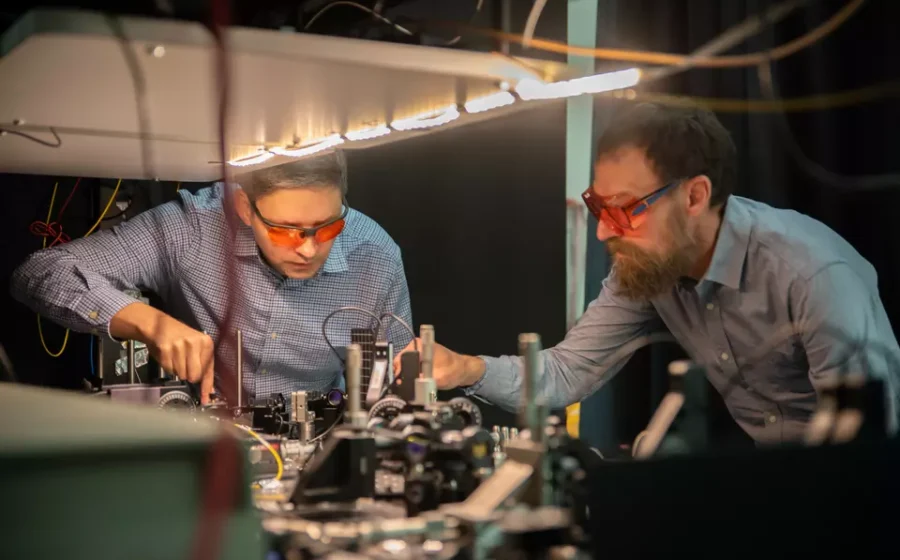
Featured image: Quantum optics lab, contextual photograph: Riley Wilson/NIST; not the apparatus in this study.
Question. Investigate. Reconsider.