Declassified | Surveillance history. Before encrypted messaging, cloud backups, and phones that remember where you ate lunch, there were telegrams. They felt private to the people who paid to send them. For decades, however, a secret U.S. intelligence arrangement made copies of a great deal of international telegram traffic available to government analysts.
The program was code-named SHAMROCK. Declassified records and the Senate’s 1970s Church Committee investigation document how major communications firms supplied traffic to the National Security Agency and its predecessors. This was neither a rumor nor a newly uncovered 2026 program. It is an established historical example of what happens when private infrastructure becomes a quiet intelligence collection point.
What SHAMROCK actually collected
According to the National Security Archive’s document-led review of newly declassified NSA material, RCA, Western Union, and International Telephone and Telegraph supplied telegram traffic from 1945 into the early 1970s. Near the operation’s end, NSA analysts reviewed roughly 150,000 telegrams per month. The historical record places the program’s termination in 1975.
That figure describes messages reviewed, not proof that every message was about an American, or that the agency acted on each one. The collection was tied to foreign-intelligence missions, but some communications and identifying details concerned U.S. citizens. The Senate saw that as a constitutional and accountability problem: a foreign-intelligence rationale does not automatically erase the privacy of Americans caught in the stream.
Private companies participated. The National Security Archive characterizes them as sharing the traffic reluctantly, a detail that complicates the idea of a single all-powerful corporate conspiracy. But cooperation under pressure still deserves scrutiny. Customers ordinarily had no way to know that their communications could travel a second route.
Three programs are often confused
The story becomes more alarming—and more precise—when three separate functions are kept apart. SHAMROCK provided access to telegram traffic. The Watch List system used intelligence collection to watch for names of people and organizations supplied by other agencies, including antiwar and civil-rights targets. Separately, NSA maintained a large biographical filing and index system, sometimes called the Rhyming Dictionary, to organize names appearing in signals intelligence.
In its 2017 release, the National Security Archive explained that an earlier NSA historical account had mistakenly conflated the targeted Watch List with the broader name-file system. The latter eventually held entries on more than 73,000 Americans; those people should not all be described as Watch List targets. Some were simply people whose names appeared in intercepted intelligence. That’s still important, but it’s a different claim.
Names associated with the Watch List included antiwar activists and civil-rights organizers. The government cited concerns about foreign influence, violent threats, and narcotics trafficking. Congressional investigators, however, questioned whether the same procedures could be turned against lawful political activity. The boundary between intelligence gathering and domestic political monitoring had become dangerously porous.
Why the Church Committee mattered
In 1975, the Senate’s Church Committee investigated intelligence activities at a moment when agencies were accustomed to withholding even their organizational practices. Former committee counsel L. Britt Snider later described the effort in a retrospective published by the CIA’s Center for the Study of Intelligence. The committee voted in November 1975 to disclose facts about SHAMROCK despite President Gerald Ford’s objections.
The resulting confrontation was not just about one code name. It addressed who could decide that a secret was too important for public scrutiny, whether intelligence agencies could use information on Americans without clear controls, and whether communications providers owed customers a meaningful duty of confidentiality.
The National Security Archive’s collection links memoranda, watch-list material, and declassified correspondence. It also documents changes and curtailments beginning before the public scandal. That chronology matters: Congress helped expose the practices, but the story is not simply one dramatic hearing instantly turning everything off.
The present-day analogy has limits
SHAMROCK was a telegram-era operation, not evidence that the NSA now reads every encrypted message or that every modern platform participates in an identical program. Technologies, statutes, judicial oversight, and collection methods have changed. Still, the structural question survives: can users know when a service provider becomes a source of information for a government agency, and who independently checks the arrangement?
As Apep Bar’s coverage of COINTELPRO demonstrates, different agencies pursued different methods. Those histories should be compared, not merged into one fictional master program.
Sources and further reading: National Security Archive, declassified NSA documents and analysis (2017); L. Britt Snider, Church Committee investigation retrospective; NSA historical account of intelligence investigations (PDF).
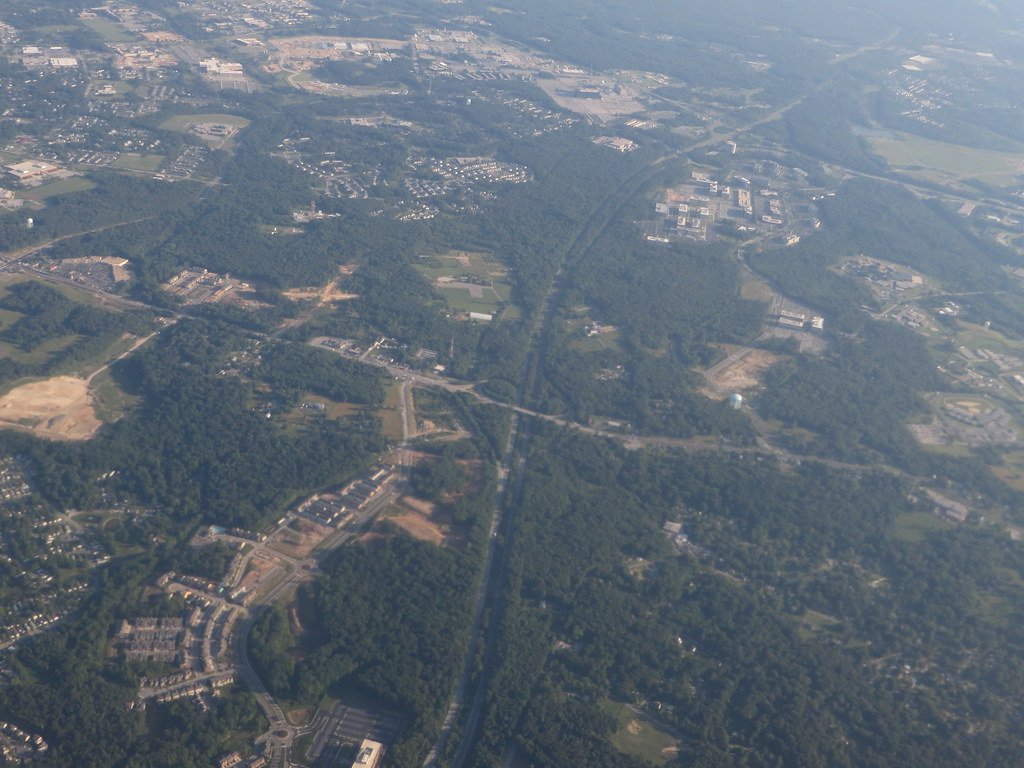
Featured image: photograph of the NSA campus at Fort Meade by Ken Lund, CC BY-SA 2.0; a contextual image, not a photograph of telegram interception.
What would the public have known if a Senate committee had never insisted on opening the files?