Declassified | Historical investigation. The mystery is not whether the CIA experimented on people without their consent. Congress established that decades ago. The harder question is how much the government could still account for after its own officials ordered the evidence destroyed.
In August 1977, senators confronted CIA Director Stansfield Turner over an unexpectedly recovered cache of records from Project MKULTRA, the agency’s secret research program into drugs and behavioral influence. The documents had largely survived because they were financial files, outside the collection targeted in a 1973 destruction order. Turner estimated approximately 8,000 pages had surfaced. The discovery reopened questions that earlier investigations could not fully resolve.
The paperwork that survived the purge
The official transcript of the August 3, 1977 Senate hearing describes 149 MKULTRA subprojects, alongside additional activities and intermediary funding records. Turner’s prepared testimony said the recovered papers identified 185 nongovernment researchers and assistants and 80 institutions associated with the projects. That does not mean 80 institutions knowingly approved abuses: the CIA itself said many researchers and institutions did not know the true source of sponsorship.
That distinction matters. Financial support could be routed through foundations or other intermediaries, obscuring the agency’s role. Some subprojects involved willing participants. Others, the hearing confirmed, involved unwitting subjects. Treating everyone named in a document as a knowing conspirator would reproduce the very evidentiary carelessness this archive should warn against.
In testimony, the CIA acknowledged that some unsuspecting people had been administered LSD in safe-house settings in San Francisco and New York. The hearing also discussed nonconsensual testing in a state hospital. The surviving records did not preserve a reliable list of every subject, dose, or outcome. The gap is not a license to invent a larger body count or claim supernatural powers of mind control; it is a serious accountability failure.
The order that made the record incomplete
According to the Senate transcript, MKULTRA documents were destroyed in January 1973 under directions ultimately traced to then-CIA Director Richard Helms, with Technical Services Division chief Sidney Gottlieb involved in carrying out the order. The destruction occurred years after the program began, and long before the 1977 hearing. Crucially, the later-discovered files were not a complete operational reconstruction: financial transactions can document spending, partners, and purposes without identifying every human subject or reconstructing a particular experiment.
One notorious episode centered on Army scientist Frank Olson, who was given LSD without his knowledge in 1953 and subsequently died after falling from a New York hotel window. The Senate record examined the circumstances of the drugging and the agency’s internal response. Olson’s death is a documented tragedy; competing explanations for all the circumstances of the fall should not be presented as proven by MKULTRA files alone.
The hearing also preserved internal disagreement. Investigators had warned about medical risks and the ethics of unwitting testing, while some officials defended operationally realistic experimentation. This was not simply a story of a rogue researcher acting invisibly to everyone else: the debate reached senior levels.
What a Supreme Court decision did—and did not—decide
The record then took another turn in court. In CIA v. Sims (1985), the U.S. Supreme Court considered whether the agency could withhold names of MKULTRA-related researchers and institutions under the National Security Act and the Freedom of Information Act. Its ruling concerned the protection of intelligence sources, not a judicial conclusion that the experiments were ethical or successful. The opinion itself recounts the discovery of approximately 8,000 surviving pages after the records purge.
Consequently, a newly unearthed institution name is not automatically proof of complicity, and a missing name is not proof of innocence. What the record establishes beyond argument is that classified sponsorship, testing without consent, and deliberate destruction of records created lasting obstacles for victims and oversight.
What the files do not prove
MKULTRA was real. Secret drug testing was real. The official testimony is unusually explicit. But claims that the CIA perfected reliable mind control, created every later social disorder, or continues the identical program today require independent evidence that these hearing records do not provide. A declassified file is a starting point, not a blank check for every theory attached to its code name.
That is why the most revealing document may be the audit trail: it survived not because secrecy failed completely, but because routine accounting did not disappear with the operational files.
Read the records: U.S. Senate MKULTRA hearing (1977); searchable hearing transcript; Supreme Court, CIA v. Sims. For a separate intelligence program that also attracted sweeping claims, see Apep Bar’s Project STARGATE reporting.
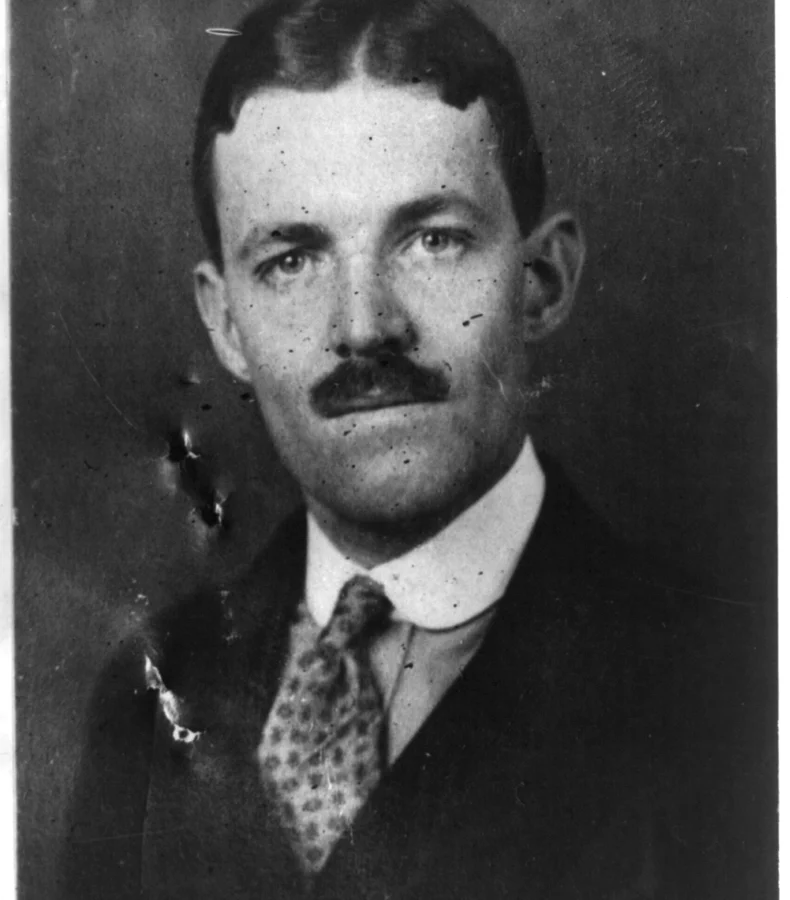
Featured image: archival portrait of Allen W. Dulles, contextual to the CIA leadership era; Library of Congress / Openverse, CC0. Not a photograph of any MKULTRA test.
Question. Investigate. Reconsider. When an agency decides which records survive, how much can the public ever know about the people harmed?