October 24, 2026 | Apep Bar News
Iran has opened a window into what it says is an underground drone-production operation—and the result is both revealing and frustratingly incomplete. Rows of unmanned aircraft, a military commander touring the facility, and a claim of a much heavier explosive payload make for dramatic television. But the bigger mystery is not whether extraterrestrials are involved. It is how much of Tehran’s advertised drone capability can actually be verified.
Iranian state television aired the footage on October 22, 2026. Its military presentation highlighted a modified Arash one-way attack drone that officials say carries a 100-kilogram warhead, compared with 50 kilograms on an earlier model. The Associated Press reported the claim; it has not established independent test results for the new weapon.
Watch: Firstpost’s Vantage examines Iran’s mystery drone claims
Video: Firstpost / Vantage, covering Iran’s underground drone footage and the upgraded Arash aircraft. The video’s “alien-like” characterization is a headline description, not evidence of extraterrestrial technology.
What Iran says it has built
Iranian Army Commander-in-Chief Amir Hatami appeared during the reported facility visit. According to Reuters and Iranian state-linked reporting, Hatami said production centers have expanded and the armed forces hold substantial drone reserves. He presented the effort as preparation for asymmetric warfare—using relatively inexpensive, distributed systems to challenge stronger conventional militaries.
The new Arash configuration is described in specialist defense coverage as Arash-3, although reports differ on whether that is a standardized official designation. Iranian presentations also describe refinements to navigation and guidance intended to reduce dependence on satellite signals. Such claims matter in an environment where electronic jamming can degrade drone operations, but public footage cannot establish how reliable those systems are in combat.
The underground footage has a major gap
Reuters reported on October 23 that it could not independently verify where or when the material shown by Iranian state television was filmed. There is also no independently confirmed production total, operational inventory or controlled demonstration of the claimed warhead performance in the publicly cited reporting.
That does not mean the footage is fabricated. It means a promotional military broadcast is not the same thing as an independently inspected factory or weapons test. Showing a stockpile on camera can send a powerful deterrent message without revealing how many aircraft are new, how many are deployable, or how quickly more could be built.
Where did the “alien-like” reputation come from?
The phrase also recalls a separate episode reported by CNN on June 23, 2026: sources familiar with the debriefing of a U.S. F-15 pilot downed over Iran in April said he described a strange, coordinated formation of drones that resembled a jellyfish. U.S. intelligence officials reportedly debated how to interpret the account, including questions about the witness’s condition after the crash.
That earlier report is not proof that the formation existed as described, caused the aircraft’s loss, or was related to the Arash upgrade revealed in October. And “alien-like,” in either context, describes something unusual—not something from another planet.
The verified story versus the unanswered questions
- Documented: Iranian state television aired drone-facility footage on October 22; Hatami publicly discussed expanded drone capabilities; AP and Reuters covered the announcement.
- Claimed by Iran: An upgraded Arash can carry a 100-kilogram warhead and has improved capabilities.
- Not independently established: The filming location and date, present production scale, operational effectiveness of the upgrade, or any connection to the earlier “jellyfish” drone account.
The Apep Bar question: Is Tehran showing its adversaries a genuinely transformed drone arsenal—or carefully revealing just enough to make the unknown feel larger than what the cameras actually prove?
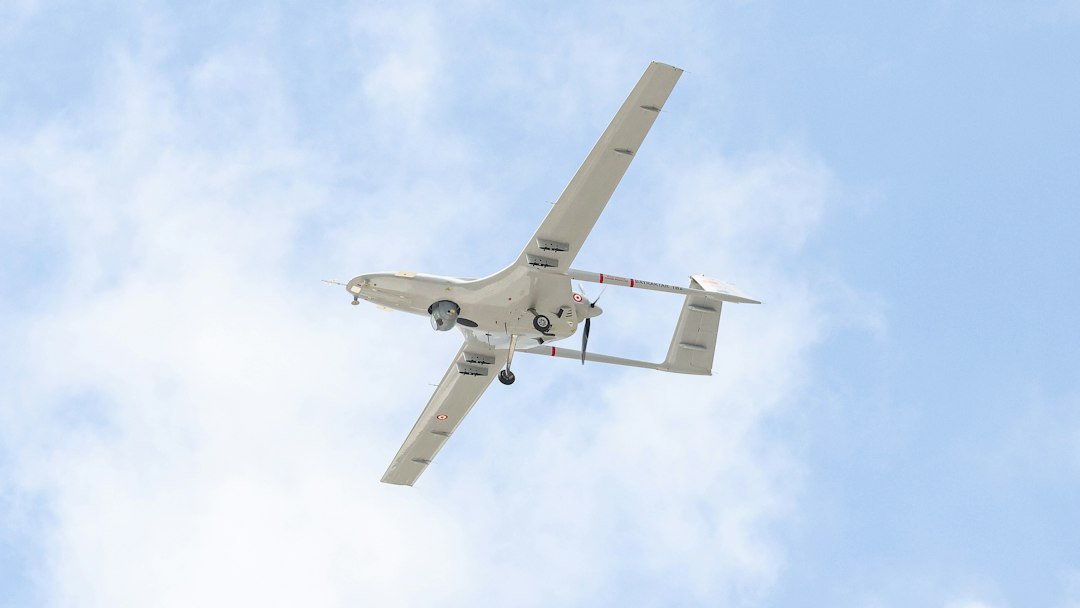
Featured image: Haci / Unsplash. Illustrative stock photo of a different UAV; it does not show the Iranian Arash drone or the reported facility.