OTTUMWA, IOWA — The city council wanted an opening prayer. What it got on October 6, 2026, was a very public lesson in what happens when religious liberty applies to a belief system that some people in the room strongly oppose.
At the start of the meeting, former council member Matt Dalbey stepped to the microphone for the scheduled invocation. He addressed a “dark father,” invoked the search for knowledge over unquestioned doctrine, and finished with five words that would travel far beyond the council chamber: “It is done. Hail Satan.”
The Pledge of Allegiance followed. Then came the objection—and an impromptu argument over whether the council should interrupt its agenda to answer the invocation. This was not a hoax or an unscheduled stunt inserted into the proceedings: local reporting and the city’s recorded meeting confirm the invocation took place as part of the official opening. Ottumwa Post reports on the meeting; watch the full council recording.
The prayer that met an immediate objection
New Life Center pastor Rick Bick approached the microphone after the invocation, describing it as a curse on Ottumwa and asking for it to be reversed then and there. Council member Cara Galloway argued that his response belonged in the designated public-comment portion of the meeting.
Mayor Benjamin Foote ultimately called for approximately 30 seconds of silence so people could reflect or pray, and the council resumed its business. To Bick, the spiritual meaning of the invocation demanded an immediate response. To Galloway, the question was whether city officials could maintain a neutral process after allowing multiple belief systems into the ceremonial opening.
One chamber. Two views of what religious freedom required in that moment. And a consent agenda still waiting to be approved.
The rule that opened the door
The crucial detail predates the viral clip. On January 20, 2026, the Ottumwa City Council voted 4–1 to adopt an invocation policy for regular meetings. This was a municipal council policy, not a newly enacted statewide religious-liberty law. Galloway cast the only vote against it. Ottumwa Radio’s January meeting report.
The stated policy was designed to respect varied denominations, other belief systems, and people with no religious belief. In a statement reported by the Ottumwa Post, the city later explained that organizers do not preapprove the words of invocations, and that hosting a speaker does not equal endorsing the speaker’s beliefs. Read the city’s statement as reproduced by local media.
Galloway had warned during the original debate that opening the microphone could also mean hearing a Satanic invocation. At the October meeting, she returned to that concern: allowing outside speakers means accepting viewpoints council members may not share, while preferential responses could create legal problems for taxpayers.
What was the speaker trying to say?
Dalbey told 404 Media that his affiliation with the Satanic Temple is nontheistic: he does not profess belief in a literal supernatural Satan. He described his interest as constitutional, rooted in concern about mixing government authority with religious expression.
That distinction does not erase the offense some Christians felt on hearing the invocation. Nor does offense establish that city officials endorsed it. A controversial religious or philosophical expression can be deeply unwelcome to listeners and still raise a serious question about equal treatment under an open government policy.
The Constitution enters the council chamber
In Town of Greece v. Galloway (2014), the U.S. Supreme Court upheld a local government’s practice of legislative prayer under the circumstances of that case. The ruling did not say government may pick and choose approved faiths based on popularity; it emphasized historical practice, nondiscrimination, and limits on coercion. Read the Supreme Court opinion.
The ruling also does not automatically settle every question about Ottumwa’s particular policy or every possible invocation. But it explains the dilemma city officials face: once an invocation program is opened, treating an unwelcome worldview differently because of its identity can present constitutional concerns.
Residents are likewise free to criticize an invocation. The delicate distinction is between a private citizen voicing an objection and the government using its official authority to favor one religious viewpoint over another.
Did Ottumwa actually reverse course?
A dramatic headline can make it sound as though the entire city officially repudiated its policy as soon as Dalbey finished speaking. The documented episode supports a narrower conclusion: the invocation prompted an objection, an unscheduled moment of silence, public controversy, and renewed scrutiny of the policy.
Reporting on October 9 said Mayor Foote had not announced plans to end the invocation practice. The city had not been shown to repeal the January policy as a result of the October 6 confrontation. KCCI’s follow-up report.
The stronger story is not an instant legislative reversal. It is the very visible difference between endorsing religious liberty as a principle and administering it when someone uses the opportunity in an unexpected way.
Apep Bar’s final question
One could argue the city should avoid formal invocations altogether. Another view is that opening meetings with prayer is a legitimate tradition, provided the opportunity is administered fairly. Both positions lead to an unavoidable question for a government that chooses to host the practice: whose beliefs get access to the microphone?
Ottumwa’s council did not just hear an unusual prayer that evening. It encountered the difficult part of its own policy: religious freedom is easiest to applaud when everyone agrees—and most meaningful to test when they do not.
Would you keep the invocation policy, revise it, or open every meeting with a secular moment of silence instead?
Watch and examine the sources
Reporting and video references: 404 Media’s October 8 report; FOX 29 Philadelphia’s TikTok clip; Ottumwa Post’s local coverage; official council meeting recording; U.S. Supreme Court decision.
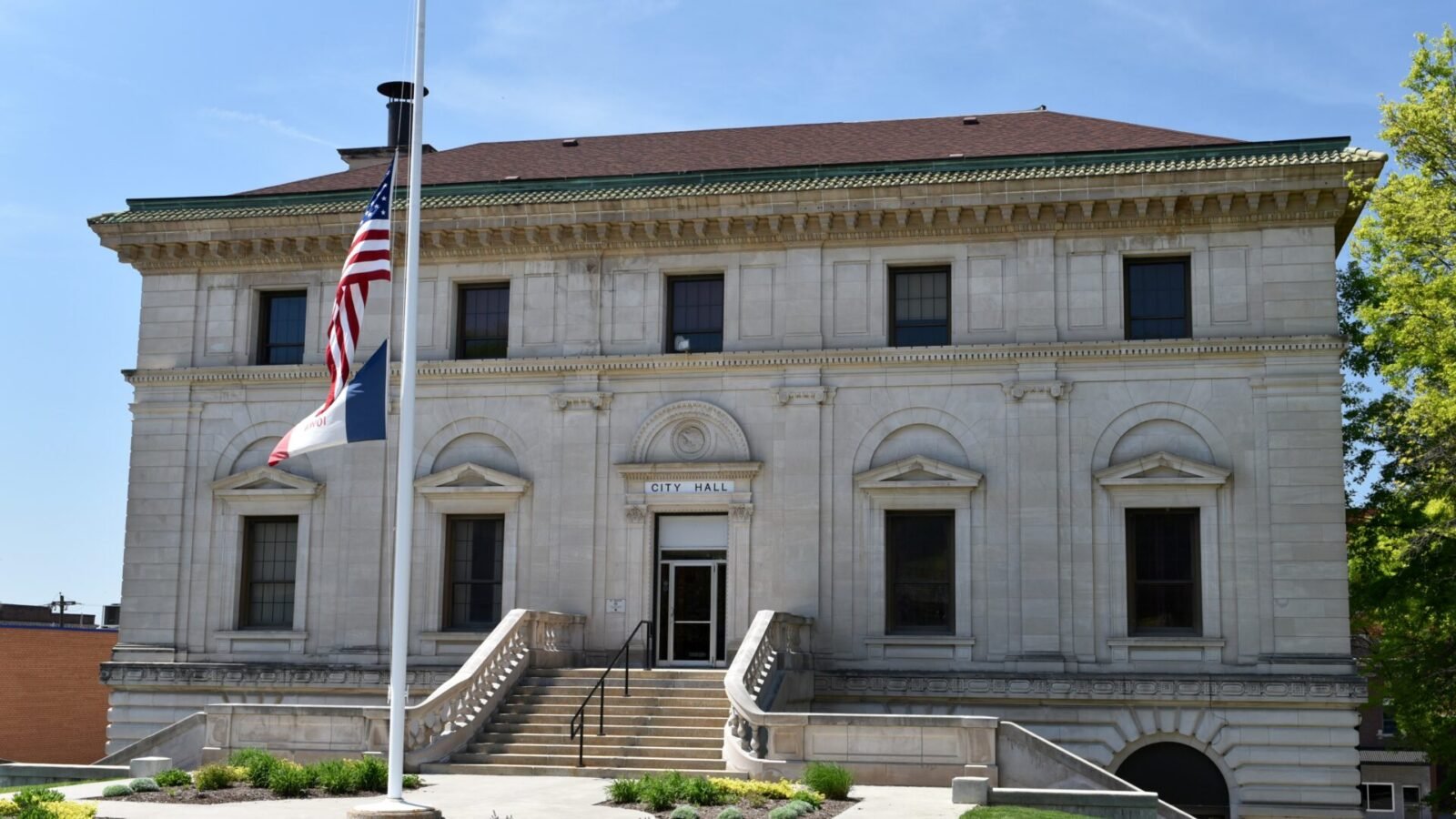
Featured image: Ottumwa City Hall, photographed May 6, 2016 by Boscophotos / Wikimedia Commons. CC BY-SA 3.0. Resized for web display; no other substantive alterations. This is an archival building photo, not a photograph of the October 2026 meeting.