INVESTIGATIONS / JUDICIAL ETHICS — OCTOBER 29, 2026. Did a program of educational trips to Israel reach roughly one in ten active U.S. federal judges? A federal judge publicly made a claim to that effect, and international groups have documented judicial delegations. The issue is worth examining: who funds such travel, who chooses what visiting judges see and hear, and how can the judiciary avoid both actual conflicts and the appearance of outside influence? But a serious investigation cannot turn a participant’s unverified percentage into a proven nationwide tally—or treat religious identity and political disagreement as evidence of corruption.
The real question: who shapes the people who judge?
The legitimacy of a federal court depends on more than a judge’s ability to apply a statute. Judges are expected to decide cases on law and evidence, without favoritism toward a party, sponsor, government or ideology. Privately funded educational travel is not inherently unethical, but it can raise questions of access, selective presentation, personal relationships and perceived impartiality—especially when the sponsor has a strong institutional interest in how contentious issues are understood.
Where the ten-percent claim came from
Federal Judge Roy Altman reportedly said in a June 18, 2026 podcast that he had helped bring roughly 10 percent of active federal judges to Israel in recent years. Commentators, including Steven Ben-Nun, amplified the claim. This is a participant-organizer’s estimate, not an independently audited statistic. No complete public roster, common denominator or accounting of duplicate attendees has been presented in the cited material to verify the exact share.
The mistaken attribution and the video’s limits
The reader also referenced a YouTube Short and attributed related remarks to Chris Minnahan. The available reporting traces the prominent ten-percent statement to Judge Roy Altman; it does not authenticate Minnahan as the originator. The complete spoken content of the supplied Short could not be retrieved, so its precise wording, speaker identity and tone have not been established here. A viewer’s impression that someone regards other people as ‘subhuman’ is an interpretation, not an objective finding that can be made without verified language and context.
What the World Jewish Congress disclosed
The World Jewish Congress has publicly described educational missions and delegations involving judges who travel to Israel and meet with officials and experts. The group has framed these trips as opportunities to learn about antisemitism, security and legal and historical issues. Its publicized activities establish that organized trips exist. They do not by themselves establish that every attendee changed judicial decisions, that all trips had identical financing or that participants pledged loyalty to any foreign government.
What makes sponsored judicial travel sensitive
Educational trips may legitimately expose judges to different legal systems and international perspectives. A risk arises when a program provides a curated itinerary, repeated access to advocates, lavish hospitality, undisclosed sponsors or little opportunity to hear contested perspectives. Even without a provable quid pro quo, those circumstances could affect public confidence. Any investigation should therefore ask who paid, which judges participated, what was disclosed and whether any relevant cases later came before them.
The difference between influence, appearance of bias and corruption
Influence is a broad concept: people inevitably learn from colleagues, conferences and travel. An appearance of impropriety arises when a reasonable observer might doubt a judge’s neutrality. Corruption, in its legal sense, requires much stronger evidence—such as an unlawful exchange, dishonesty or misuse of office. A judge’s visit to Israel, or to any other country, does not establish corruption, discriminatory intent or a future biased ruling. Treating an entire national, religious or ethnic group as a coordinated source of wrongdoing would be unsupported and unfair.
Recusal, gifts and the federal ethics rules
The Code of Conduct for United States Judges directs judges to avoid impropriety and its appearance and to perform judicial duties impartially. Federal recusal law, 28 U.S.C. § 455, requires disqualification in proceedings where impartiality might reasonably be questioned and in specified conflict situations. Financial disclosure and travel-reimbursement rules can also apply. Whether a particular trip triggers reporting or recusal depends on the circumstances; there is no blanket rule that every privately funded overseas educational visit disqualifies a judge from all future cases involving the destination country.
A concrete example: an Israel-related recusal
The debate is not purely hypothetical. Reporting describes a Ninth Circuit judge recusing from an Israel-related case after participation in a World Jewish Congress judicial mission. Recusal is a procedural safeguard, not an admission of prior corruption or a ruling that a sponsored trip was unlawful. It does show how travel can create a case-specific issue significant enough for a judge to step aside.
An investigation that did not prove wrongdoing
A misconduct complaint against Judge Altman over his activities was dismissed in September 2026 because the reviewing process found insufficient evidence to support misconduct. The dismissal must be included alongside the allegations: omitting it would leave an unfair impression that official findings had validated the accusation. At the same time, a dismissed complaint does not make broader policy questions about the transparency of judicial travel disappear.
The Seven Noahide Laws allegation
Steven Ben-Nun and others have suggested connections between these trips and advocacy around the Seven Noahide Laws, a set of religious-ethical principles within Jewish tradition. The source material reviewed here does not establish that judges were instructed to enforce those laws, that they agreed to do so or that federal court decisions are being secretly governed by them. Religious concepts are not automatically binding American law. U.S. federal judges are bound by the Constitution, applicable statutes and binding judicial precedents, not religious rules promoted by private organizations.
Religious liberty is not a license for collective suspicion
The United States protects freedom of religion and government neutrality toward religious belief. It is legitimate to investigate a sponsoring institution’s funding, positions and lobbying goals, regardless of whether it is religious or secular. It is not legitimate to treat Jewish identity, travel to Israel or knowledge of Jewish teachings as proof that a judge is disloyal or corrupt. The same standard must apply to judges attending programs connected with Christian, Muslim, secular or foreign-government organizations.
What an independent audit should establish
A useful public accounting would identify the sponsoring groups and ultimate funders, participating judges, dates and destinations, costs, official reimbursements, agenda speakers and interactions with government officials, and the disclosures filed under applicable rules. Researchers could then examine whether any judges heard related cases and whether they disclosed interests or recused. Correlation alone would not prove improper influence: decisions would still need case-specific legal and factual analysis.
Questions for the judiciary and the travel organizers
The public can reasonably ask whether the educational programs provide competing viewpoints; whether funding or hospitality creates obligations; whether participants receive ethics guidance before travel; and how conflicts are identified when relevant cases arise. Organizers can respond by publishing agendas, funding policies, participant lists where legally appropriate and independent evaluations. The judiciary can strengthen confidence through transparent disclosures and clear recusal practices.
How to evaluate any viral claim of systemic capture
Start with a transcript, the original speaker and the precise numerical claim. Next verify participation records rather than treating repeated references to one estimate as separate proof. Examine financial disclosures and judicial decisions, then check for formal findings by an appropriate body. Finally separate normative criticism—whether trips should be restricted—from a factual allegation that a judge committed misconduct. The distinction protects legitimate oversight from rumor-driven accusations.
Apep Bar’s question
If the independence of the judiciary depends on both actual fairness and public confidence in fairness, should privately sponsored foreign travel by federal judges face stronger disclosure and recusal safeguards—even in the absence of proof that any particular judge was improperly influenced?
Original sources, court standards and disclosure
Steven Ben-Nun: commentary on the ten-percent claim · Reader-supplied YouTube Short · U.S. Courts: Code of Conduct for United States Judges · 28 U.S.C. § 455: Disqualification of justice, judge or magistrate judge · World Jewish Congress: organizational programs and announcements · U.S. Courts: judicial financial disclosure information.
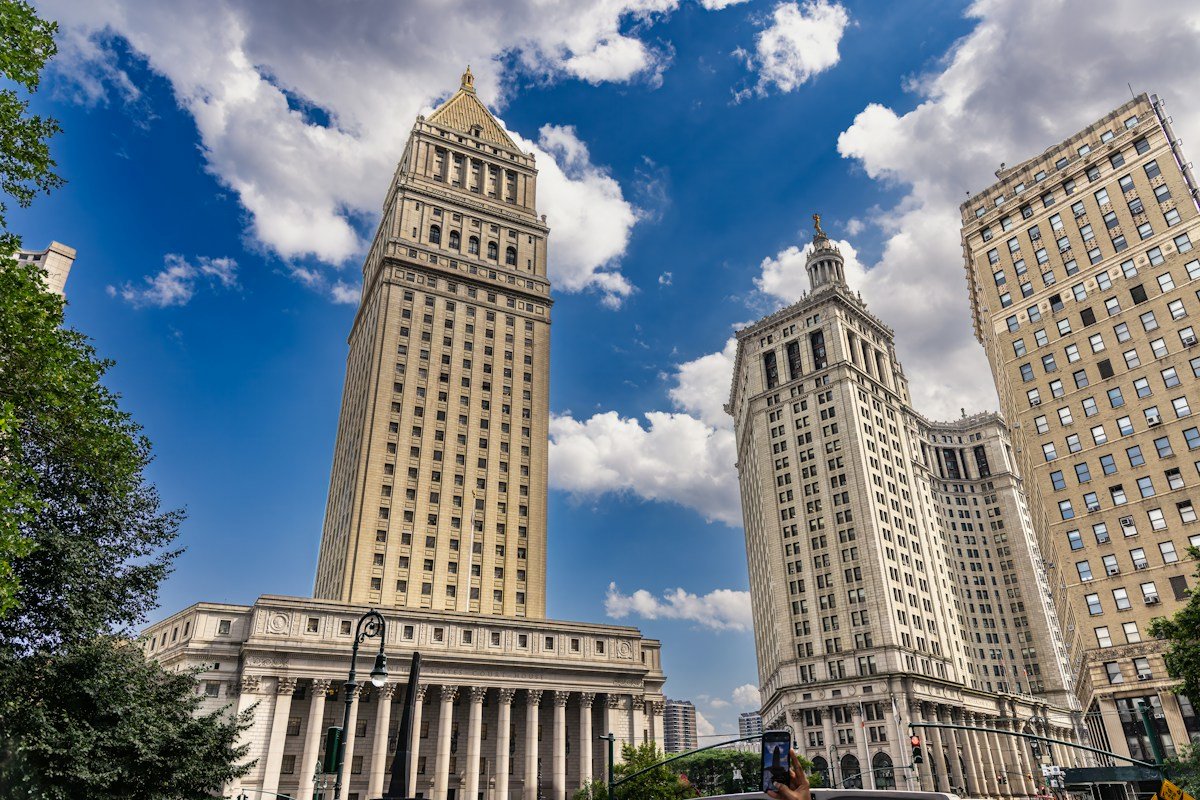
Editorial note: The reported 10% figure is attributed to Judge Roy Altman, not established here as a fully audited national statistic. The complete video narration was inaccessible and the speaker’s tone is not treated as evidence of discriminatory belief. Allegations linking travel programs with the Noahide Laws lack verified proof of any attempt to apply religious law in federal courts. A September 2026 judicial misconduct complaint was dismissed for insufficient evidence. The unique featured photo shows a federal courthouse, not program attendees. Photo: Jason Gooljar / Unsplash.