INVESTIGATION | REGULATORY ACCOUNTABILITY | NOVEMBER 17, 2026
A new report accuses an FDA vaccine-office director of disclosing private deliberations to journalists and industry allies. Public records confirm a furious internal dispute—but do they identify the leaker, or prove a crime?
An FDA official’s phone lights up during a private meeting. On the screen, according to unnamed people who say they witnessed the moment, is the name of a New York Times reporter. Soon, sensitive agency debates are surfacing in the press. The implication is explosive. The evidence, so far, is more complicated.
On November 17, investigative journalist Paul D. Thacker published allegations from unnamed FDA insiders that Dr. David Kaslow, the director of the agency’s Office of Vaccines Research and Review (OVRR), repeatedly disclosed confidential regulatory discussions to media and industry contacts. The report further alleges that his office impeded inquiries into possible harms following mRNA COVID-19 vaccination. Those accusations have not been independently established, and no public finding of unlawful disclosure by Kaslow was identified in the records reviewed for this article.
Who is David Kaslow?
Kaslow is not a peripheral adviser. The FDA’s Center for Biologics Evaluation and Research organizational listing identifies him as director of OVRR, the office responsible for reviewing vaccines. His career also includes work at Merck and PATH. In announcing his FDA appointment in 2022, PATH described a long career spanning government, nonprofit, biotech and pharmaceutical vaccine research.
A previous industry job can raise legitimate questions about revolving-door safeguards and conflicts management. It does not, by itself, prove that an official has acted for a former employer or improperly shared information.
The allegation: confidential conversations reaching outsiders
Thacker’s reporting attributes several claims to unnamed FDA insiders: that Kaslow disclosed internal discussions to pharmaceutical contacts and journalists; that complaints were delivered to senior federal officials; and that investigations of possible vaccine-associated deaths were obstructed. One anecdote concerns a reporter’s name appearing on a telephone screen during an FDA meeting. Another concerns physician and vaccine commentator Dr. Paul Offit discussing a disagreement between Kaslow and then-agency vaccine regulator Dr. Vinay Prasad.
Neither anecdote independently establishes what was said on any telephone call or who supplied any particular document to a reporter. Offit’s publicly expressed support for reviewing Moderna’s application and his reported friendship with Kaslow are not themselves evidence of an unauthorized disclosure. A leak attribution would require stronger evidence—such as authenticated communications, access logs, a specific confidential document tied to a recipient, or findings from an authorized investigation.
The original report states that the Department of Health and Human Services did not respond to repeated requests for comment. That is the reporting outlet’s description, not an independently verified response to Apep Bar. We have not established a public statement from Kaslow addressing these allegations.
What the FDA’s own memo establishes—and what it does not
One relevant document is not in doubt: the FDA has published Vinay Prasad’s November 28, 2025 email to CBER staff. The memo asserted that career employees had classified at least 10 reported pediatric deaths as possibly, probably or likely related to COVID-19 vaccination. It criticized the agency’s previous safety work and also accused unnamed staff of providing slides, emails and accounts of internal meetings to media outlets.
That proves Prasad made the allegations and sent the memo. It does not establish that a named colleague leaked it—or that every reported death was conclusively caused by a vaccine. The memo was addressed to a broad CBER mailing list, which means the circle of potential recipients cannot be reduced to one official on the basis of publication timing alone.
There is another critical detail frequently missing from simplified versions of this story. In a June 16, 2026 letter with supporting records, Sen. Ron Johnson described how FDA reviewers initially assessed 10 cases as possibly or probably associated with vaccination, but revised three assessments by December 5, 2025. The resulting count was seven classified as possible or probable—not 10 firmly established vaccine-caused deaths. The letter also reproduced an FDA official’s recommendation to consider adding warning language about myocarditis with fatal outcomes.
These are serious safety assessments worthy of independent scientific examination. But possible and probable are assessment categories, not proof beyond scientific dispute. The FDA itself explains that a VAERS report alone cannot establish causation. Independent experts have questioned the underlying review methodology and requested case-level evidence; see FactCheck.org’s examination. Myocarditis is a recognized rare adverse event following certain mRNA COVID-19 vaccinations, and suspected severe outcomes should be rigorously investigated. Neither reflexive dismissal nor unsupported certainty is an adequate substitute for that work.
Moderna’s flu vaccine: a real regulatory reversal, a disputed explanation
Another strand of Thacker’s report concerns Moderna’s mRNA influenza vaccine. The regulatory sequence is documented. On February 3, 2026, the FDA issued a refusal-to-file letter raising concerns about the application’s adequacy for substantive review. On June 18, a publicly announced FDA advisory committee reviewed the vaccine in an open meeting. Its members voted unanimously that the benefits outweighed the risks for the adult populations under consideration. The FDA then approved MFLUSIVA on August 5, 2026 for adults aged 50 and older.
Former HHS adviser Calley Means has characterized the committee process as a sham, an accusation amplified in the new report. The existence of a public advisory meeting, FDA briefing materials, a recorded webcast, and the approval letter establishes an observable regulatory process; it neither automatically validates every decision nor supports a claim that the committee was secretly manipulated. That more serious allegation requires evidence of improper appointment, undisclosed conflicts or interference with members’ deliberations.
When is an FDA disclosure actually illegal?
The word illegal in the original headline deserves scrutiny. Federal law can prohibit unauthorized disclosure of certain categories of protected information, including trade secrets and confidential commercial information. FDA’s own confidentiality procedures cite 21 U.S.C. § 331(j) and 18 U.S.C. § 1905. Separately, 21 CFR § 20.20 describes FDA disclosure policy, including protections for privacy, commercial secrets and candid internal deliberations.
But not every unauthorized discussion, press contact or leak of a deliberative memorandum automatically satisfies the elements of a federal criminal offense. The specific information disclosed, its legal status, the employee’s authorization and the circumstances matter. Administrative misconduct, a breach of policy and criminal illegality are different conclusions requiring different proof.
Five questions an accountable investigation must answer
- Which precise documents or statements were disclosed? Was each actually protected from release, and under what authority?
- Who had access? The recipient list and distribution history of the November 2025 memo would help distinguish suspicion from attribution.
- Were complaints formally investigated? Case numbers, referral records, or public findings would help substantiate the claim that senior officials were warned and failed to act.
- Were safety reviews impeded? Written data-access denials, staffing orders, timelines and investigators’ accounts would test this separate allegation.
- What do the underlying clinical records show? Privacy-protected independent review of the pediatric case assessments could resolve some of the competing claims without treating a preliminary classification as definitive.
Related Apep Bar reporting: What Congress Heard About COVID: Vaccine Injuries and the Missing Answers and The Vaccine Death Count That Doesn’t Add Up.
Watch the source, not a reenactment
Contextual video: FDA’s June 18, 2026 public advisory committee webcast about Moderna’s mRNA influenza vaccine. This is an official meeting record relevant to the disputed regulatory process; it does not depict or prove the alleged leaks.
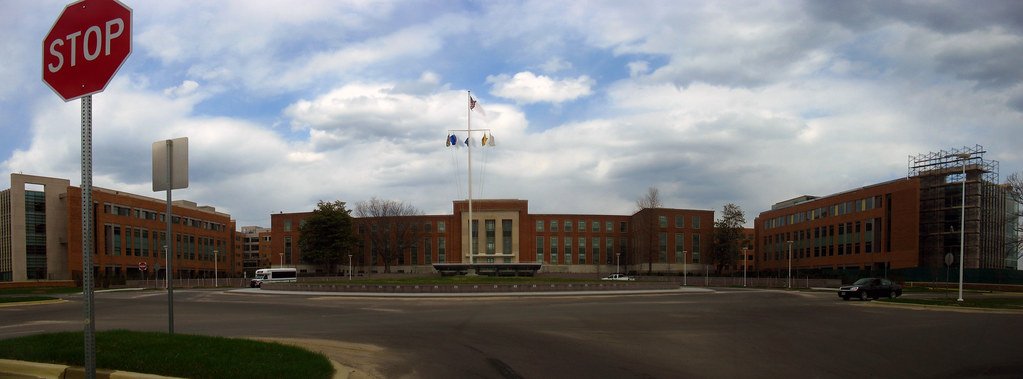
Featured image: FDA building at White Oak, Maryland, photographed April 2009. Documentary location photograph by thisisbossi, CC BY-SA 2.0. The photograph is context only, not an image of the alleged events.
The public documents show an agency facing disputes about vaccine safety and regulatory decisions. The new report adds serious allegations about how internal information traveled outside FDA walls. What the available records do not yet show is who leaked what, to whom, and with what legal consequence. Those are the questions investigators—and readers—should insist on answering.