APE P BAR INVESTIGATIONS | EUROPEAN POWER, PART 3 | October 26, 2026
Three Roman dynasties offer a documented case study in how religious office, landed wealth, marriage alliances and patronage reinforced one another. The records reveal competition and privilege—not proof of a timeless secret government.
When a pope was elected in medieval or early modern Rome, the consequences could extend far beyond theology. The papacy governed territory, negotiated with monarchs, issued appointments and controlled resources. Families able to place relatives near the pontiff could acquire prestige, offices, protection and sometimes land. The Orsini, Colonna and Borghese illustrate different phases of this system. They were not a single coordinated bloc: at crucial moments, their interests collided.
Orsini: fortified Rome and the papal connection
The Orsini were among Rome’s most consequential aristocratic lineages. Their holdings, castles, marriages and positions within the Church made them central players in the politics of the city and its surrounding countryside. Medieval Roman power was often intensely local: control of roads, fortifications and landed jurisdictions mattered alongside access to the papal court.
The Holy See’s official papal register identifies Giovanni Gaetano Orsini as Pope Nicholas III, whose pontificate began in 1277 and ended in 1280. It also records Pietro Francesco (Vincenzo Maria) Orsini as Benedict XIII, pope from 1724 to 1730. The family’s papal connections thus span centuries, although the fortunes and priorities of individual branches changed dramatically over time. Giacinto Bobone, generally associated with the Orsini lineage, became Celestine III in 1191; the Vatican lists his secular name as Giacinto Bobone, a useful reminder that medieval naming and lineage claims need care.
Sources: Holy See, Nicholas III; Holy See, Benedict XIII; Holy See, Celestine III.
Colonna: a rival house and a pope of its own
The Colonna competed with the Orsini for political influence and control of Roman strongholds. The rivalry could involve armed confrontation, ecclesiastical sanctions and shifting alliances. It is misleading to portray either family as uniformly loyal to one political camp across all centuries: local interests and particular papal elections often mattered more than a permanent label.
The Colonna’s most prominent papal representative was Oddone Colonna, elected Martin V in November 1417. His election at the Council of Constance helped end the Western Schism’s competing papal obediences. That event illustrates how a family name could become associated with the restoration of institutional authority, while also creating opportunities for relatives and clients.
In the late thirteenth and early fourteenth centuries, members of the Colonna house were involved in major conflicts with Pope Boniface VIII. Those episodes should be studied through papal correspondence, contemporary chronicles and legal documents, rather than compressed into a claim that one family ‘controlled’ the Church.
Source: Holy See, Martin V: official pontifical chronology identifying Oddone Colonna. For the older rivalry, compare the historical survey in the New Catholic Encyclopedia’s Orsini entry, which distinguishes documented political history from legendary origin stories.
Borghese: papal office converted into cultural and material power
The Borghese family’s rise is especially visible because substantial evidence survives in buildings, artworks, collection records and institutional histories. Camillo Borghese became Pope Paul V in 1605, serving until 1621. His nephew Scipione Caffarelli Borghese became a cardinal and an influential collector and patron. Their story shows how family advancement operated through the institutions of the papal court.
The Galleria Borghese, which holds much of Scipione’s collection, states that he assembled artworks through commissions, purchases and sometimes coercive means. Its account describes the seizure of paintings from Cavalier d’Arpino’s studio in 1607 and the controversial removal of Raphael’s Baglioni Entombment from Perugia in 1608. These are concrete, investigable episodes of patronage and power—not evidence of supernatural or clandestine control.
The museum identifies Giacomo Manilli’s 1650 description of the Villa Pinciana as an important contemporary witness to the collection. It also cites the 1693 collection inventory and the 1833 Borghese fideicommissary inventory in individual object histories. A fideicommissum, or entailed arrangement, helped keep property or collections together across generations. These records show the mechanics of preservation and inheritance more precisely than speculation about an undifferentiated aristocratic network.
Sources: Holy See, Paul V; Galleria Borghese, history of the collection and its 1650 source; Galleria Borghese object record identifying the 1650, 1693 and 1833 inventories; Galleria Borghese archival database.
What the archives actually preserve
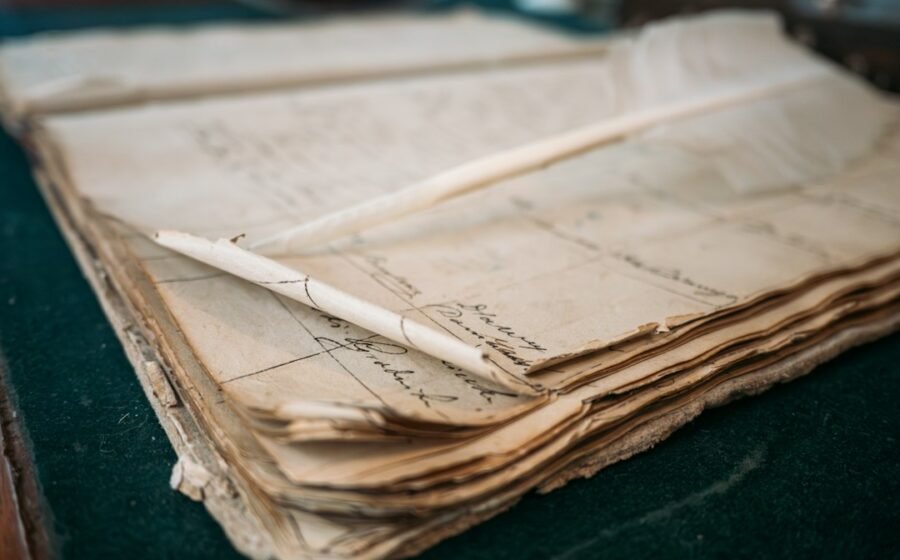
One of the strongest ways to investigate the three houses is to look beyond family legends to administrative traces: edicts, property transactions, wills, inventories, ecclesiastical appointments and court records. The State Archive of Rome’s inventory of its Collezione dei Bandi identifies a section on baronial and feudal jurisdictions with files for Borghese (1675–1736), Colonna (1601 and 1802), and Orsini (1710). The archive inventory is a finding aid—not the text of each underlying decree—but it provides specific entry points for further primary-source work.
Primary-document guide: Archivio di Stato di Roma, Collezione dei Bandi, Appendix 3, p. 22. Researchers should consult the actual files before making claims about the contents or effects of any particular order.
What does ‘Black Nobility’ mean?
The expression nobiltà nera, often translated as ‘Black Nobility,’ is associated with Roman aristocrats who remained loyal to the papacy after the Italian army entered Rome in September 1870 and the pope lost his temporal rule over the Papal States. It describes a historical political allegiance, not a racial category or a proven secret council of thirteen families. The 1870 turning point is documented in the Italian encyclopedia Treccani’s account of the breach at Porta Pia.
Crucially, the institutional landscape did not remain frozen. In 1968, Pope Paul VI issued Pontificalis Domus, a primary legal text reorganizing the papal household. The decree explicitly provided that no office in the household was hereditary and abolished or reorganized a number of traditional court positions. Any claim that medieval aristocratic privileges operate unchanged today must confront such documented reforms.
Sources: Treccani, the breach at Porta Pia, September 20, 1870; Paul VI, Pontificalis Domus, March 28, 1968 (original decree, Italian).
Evidence, not an all-purpose conspiracy
Established: these houses held estates, occupied high church offices, intermarried with other elites, competed for influence and used patronage. The Vatican’s official succession lists, archival inventories and surviving collection records support those conclusions.
Not established: that Orsini, Colonna and Borghese were members of one permanent secret organization directing all European governments, banks or religious institutions; that ‘Black Nobility’ names an occult world cabinet; or that exactly thirteen families exercised continuous collective control. Such claims require specific records identifying participants, dates, decisions, assets and causal links. A surname appearing in a genealogy is not, by itself, proof of coordinated conduct.
The more important historical question is how identifiable institutions enabled privilege: Who granted land? Who controlled appointments? What did contemporaneous financial and legal records say? Which reforms changed those arrangements? Those questions are answerable, and the surviving documents are more revealing than a mythical master list.
Next in the series — Part 4: Venice, Genoa and the merchant elites: maritime trade, state debt and the institutions that made commercial power durable.
Research notes and primary-source trail
- Vatican official papal register: Nicholas III (Orsini); Martin V (Colonna); Paul V (Borghese). These are official retrospective institutional records, not contemporary medieval manuscripts.
- State Archive of Rome, Collezione dei Bandi finding aid, Appendix 3, p. 22. The catalog locates original documents; it is not a substitute for reading them.
- Galleria Borghese collection history, citing Manilli’s contemporary 1650 description; museum provenance record citing the 1693 and 1833 inventories. These are identified primary records interpreted by museum curators.
- Paul VI, Pontificalis Domus (1968), an original legal instrument documenting changes to the papal household.
- Treccani, Porta Pia (1870), secondary historical context.