APEP BAR SCIENCE WIRE | October 14, 2026 — The universe is expanding faster over time, and cosmologists use the name dark energy for whatever appears to be driving that acceleration. But what if the mysterious effect can be described not by a perfectly constant vacuum energy, but by a cosmic component with something resembling viscosity?
A peer-reviewed paper published October 8, 2026, in The European Physical Journal C tests exactly that possibility. Researchers Shahnawaz A. Adil, Sonej Alam, Somasri Sen and J. Alberto Vazquez examined models in which dissipative processes generate effective negative pressure—something that can imitate the accelerating expansion usually associated with a cosmological constant.
Wait. The universe has viscosity?
Not in the everyday sense of a giant jar of syrup floating between galaxies. The study treats dark energy as a theoretical fluid within a mathematical description of cosmic expansion. Bulk viscosity is a way to model energy dissipation when that fluid expands or contracts; under the researchers’ assumptions, it can create an effective pressure that changes the universe’s expansion history.
That is provocative because the standard model of cosmology, known as Lambda-CDM, usually treats dark energy as a cosmological constant. A truly constant component does not evolve in the same way as some of the newer proposed models.
What did the scientists actually test?
The team compared two versions of the viscous model with observations. One model kept dark matter and dark energy separate; the other allowed a proposed interaction between them. Their tests drew on Type Ia supernova observations, the Dark Energy Spectroscopic Instrument’s second data release (DESI DR2), and cosmic microwave background information from the Planck mission.
Both models could describe the observed background expansion history, the authors report. Their interacting model showed only a marginal statistical preference over Lambda-CDM under their evidence calculations, and some inferred parameters depended on the assumptions used in the analysis. That is scientifically interesting; it is not a discovery that the cosmic-constant model has been disproved.
Why this matters even if the model is wrong
Different explanations can fit some of the same measurements. Testing alternatives reveals which future observations might distinguish them. More precise maps of galaxies, measurements of structure growth and independent cosmological data will be vital before anyone can declare how dark energy works.
One more important distinction: dark energy is a term from cosmology, not evidence of ghosts, occult forces or a literal hidden dimension. The mystery needs no embellishment; it already concerns the fate of the entire universe.
What is documented: a new peer-reviewed theoretical-data analysis finds a viscous-fluid description remains viable at the level tested. What remains unknown: the physical nature of dark energy, and whether this alternative better describes reality.
If nearly every galaxy is being carried along by cosmic expansion, is the universe hiding a constant—or something that changes with time?
Primary source: Adil et al., “Dissipative cosmology and the nature of dark energy,” October 8, 2026, European Physical Journal C. Background: DESI DR2 research update.
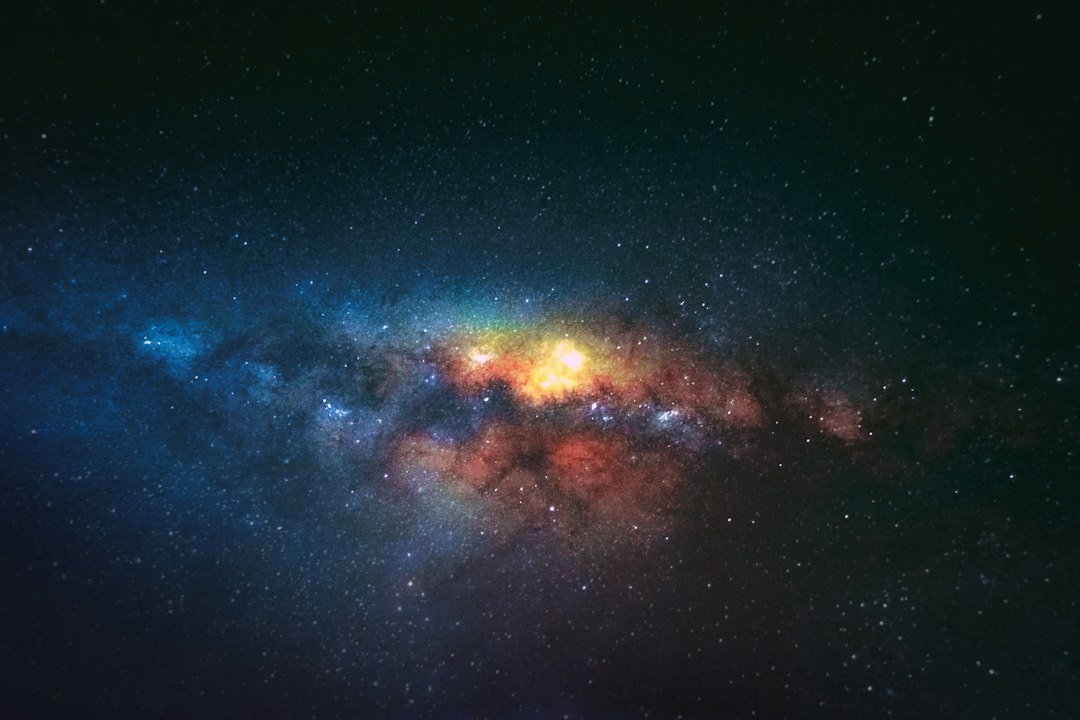
Featured image is illustrative astronomical photography by Shot by Cerqueira / Unsplash; it is not an image of dark energy.