CRACKED: The System That Broke Black America — Part I
By SaKm
The crack epidemic did not begin in Richard Nixon’s White House. But the federal system later used to fight it was shaped by decisions from the early 1970s. The history begins not with a street-level dealer, but with government policy.
The declaration: June 17, 1971
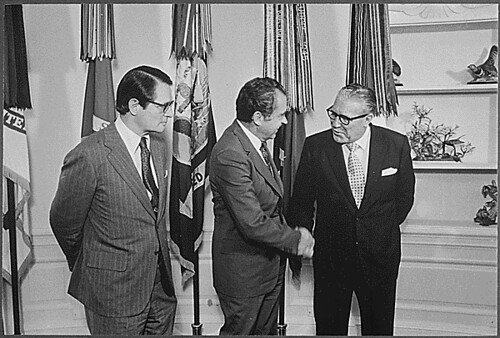
On June 17, 1971, President Richard Nixon described drug abuse as America’s “public enemy number one” and called for a nationwide and international offensive. The declaration did not invent federal prohibition. It gave the existing struggle a new political identity and demanded closer coordination between agencies. The crack-cocaine markets that later reshaped American cities were still years away. Yet the institutional decisions of this period created a framework that subsequent administrations could expand.
His message to Congress described rising heroin deaths and requested an additional $155 million for fiscal 1972, raising proposed federal drug-control spending to $371 million. Of the increase, $105 million was designated for treatment and rehabilitation. That matters because Nixon’s initial program was not solely a strategy of incarceration: it also sought to increase treatment capacity, including coordinated addiction services. The punitive regime often associated with the phrase ‘War on Drugs’ evolved through later legislation.
Building the federal machinery
The Comprehensive Drug Abuse Prevention and Control Act of 1970 included the Controlled Substances Act, establishing the federal schedules still central to drug regulation. Nixon created the Special Action Office for Drug Abuse Prevention in 1971. Congress subsequently authorized it, and physician Jerome Jaffe became a key figure in coordinating treatment initiatives.
In 1973, Reorganization Plan No. 2 consolidated federal narcotics enforcement functions into the Drug Enforcement Administration, which began operating on July 1. Enforcement capacity and treatment policy expanded alongside one another, but they were not identical projects. The same system could be used differently by later presidents, prosecutors, and legislators.
Race, law and order, and political strategy
Nixon’s ‘law and order’ politics arose in a period marked by civil-rights organizing, urban unrest, demands for racial justice, and white backlash. Scholars of crime policy have examined how concerns about disorder and race shaped political messaging. The question is not whether every drug-control decision was expressly racial, but whether public policy and its enforcement operated within a political environment where racial appeals were consequential.
In 2016, journalist Dan Baum reported a statement that former Nixon adviser John Ehrlichman allegedly made to him in 1994, asserting that drug policy had been used politically against antiwar activists and Black Americans. The charge deserves serious scrutiny, but the conversation was reported decades after the fact and is not equivalent to a contemporaneous directive. Its evidentiary weight must be assessed against presidential records, legislation, agency budgets, and enforcement practices.
COINTELPRO’s overlapping history
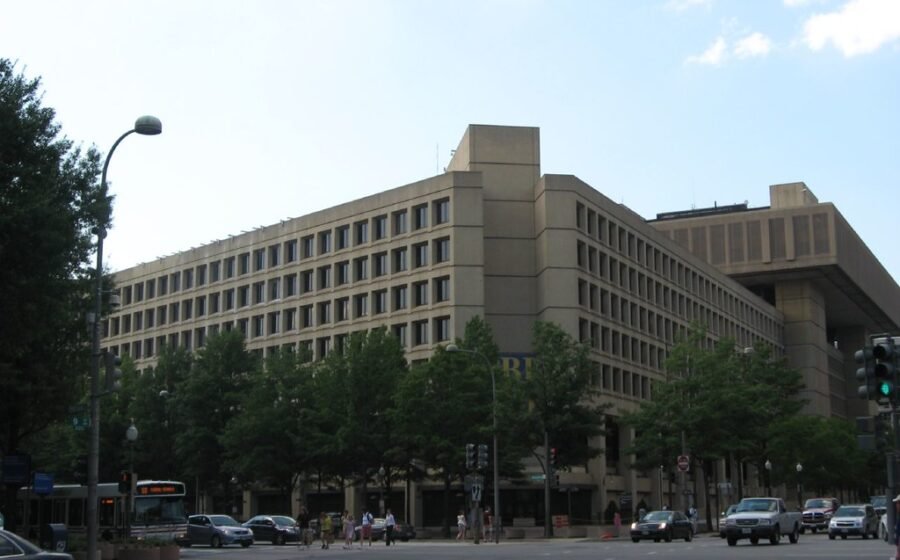
The FBI’s COINTELPRO operation began in 1956 and expanded to target Black political organizations by 1967. As later investigations established, agents infiltrated groups, spread internal discord, and attempted to discredit activists—even in cases lacking evidence of criminal wrongdoing. The formal program ended in 1971, the same year Nixon made his drug declaration. The overlap is historically significant, but chronology is not proof of a single continuous program.
A credible investigation of continuity would require records of post-1971 operations, officials, orders, informants, and tactics. That inquiry belongs beside—but must not be confused with—the separate historical record of Nixon-era drug policy.
The penalties that came later
Crack cocaine became a major urban drug-market issue during the 1980s. In 1986, Congress created a 100-to-1 quantity disparity between crack and powder cocaine for certain federal mandatory minimum sentences. That law was enacted under Ronald Reagan, not Nixon. Congress reduced the quantity ratio to 18-to-1 in 2010, after years of criticism of its disparate effects.
The distinction is central to understanding responsibility. Nixon helped institutionalize a national drug campaign; later administrations and Congress made separate choices about penalties, policing, and prosecution. Investigating those choices one by one reveals a clearer history than attributing every outcome to a single secret plan.
A foundation—and an unresolved question
The documentary record supports a firm conclusion: before the crack epidemic, the United States had built a durable national structure for drug enforcement, a federal drug scheduling system, and political rhetoric that described substance use as a public enemy. It also had a documented history of domestic intelligence abuses against Black political groups.
The record does not, from those facts alone, demonstrate that Nixon’s drug initiative was designed to introduce crack cocaine or that COINTELPRO operated as a centrally directed crack-distribution network. The question to investigate is how subsequent laws, policing, foreign policy, and the cocaine trade interacted—and who suffered their costs.