APEP BAR ALTERNATIVE SCIENCE | October 18, 2026
Imagine a chain of atoms that is not held together like an ordinary molecule, but by the rules of quantum motion in an almost perfectly one-dimensional world. Physicists predicted such bound states nearly a century ago. Now a laboratory team has observed them in ultracold atoms.
On September 14, 2026, the University of Innsbruck announced that researchers led by physicist Hanns-Christoph Nägerl had realized states known as Bethe strings, predicted by Hans Bethe in 1931. Fresh October reporting brought renewed attention to the finding.
What makes a Bethe string unusual?
Ordinary molecules are associated with chemical bonding. Bethe strings are multi-particle bound states arising from particle interactions under the special constraints of one-dimensional quantum systems. Their behavior helps physicists test mathematical descriptions of strongly interacting matter.
The experiment used cesium atoms cooled to extremely low temperatures and confined in narrow configurations using laser-based optical techniques. By changing how the atoms interacted, researchers created conditions in which the unusual states could form. Their properties were inferred from measured experimental signatures, not from photographs of little beaded necklaces floating in space.
Why test old equations now?
Quantum theory has long supplied striking predictions that are difficult to isolate in the messy laboratory world. Creating closely controlled cold-atom systems lets scientists check where models hold, where they fail and how many-body systems evolve.
Such work can inform future studies of exotic matter and quantum simulation. It does not mean scientists can now manufacture unlimited energy or manipulate reality at will—claims that routinely outrun genuine quantum results.
A different kind of strange
There is plenty of wonder here without exaggeration. Scientists engineered an environment in which an old theoretical idea became measurable. The phenomenon is unusual precisely because the underlying physics is so carefully defined.
Evidence status: Experimental research reported by the university; no claims of paranormal applications.
Sources: University of Innsbruck, Sept. 14; Live Science, Oct. 16.
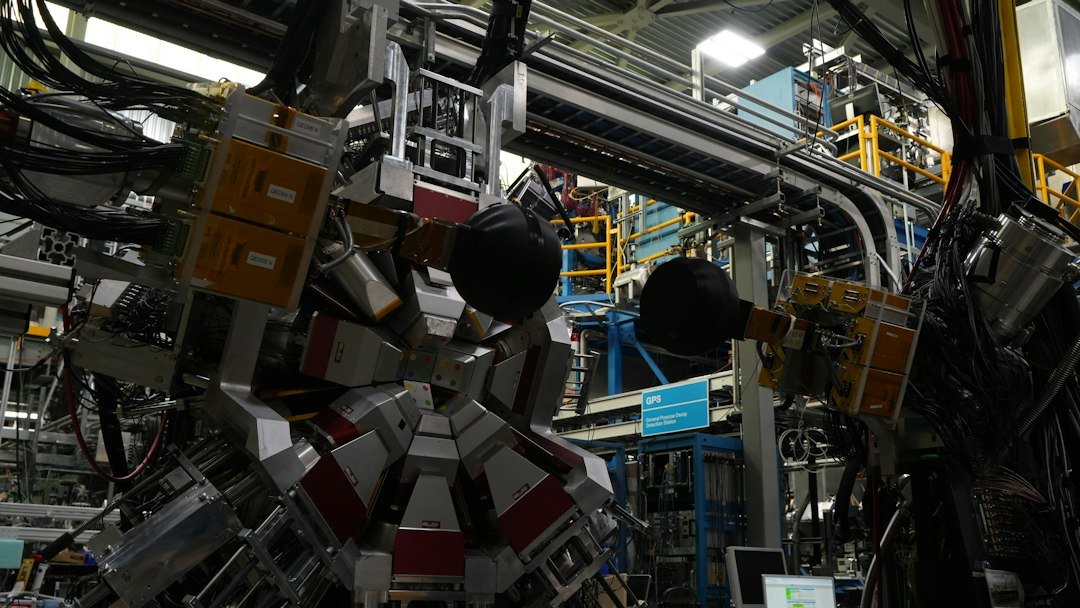
Featured image is illustrative laboratory photography, not an image of the reported experiment.