APEP BAR | Investigations — Part One
When a judge orders a person to post a commercial bail bond, who receives the money? In Louisiana, the answer once included a fund that paid for the court’s own operations. That arrangement became the subject of a landmark federal appellate ruling.
A documented conflict—not just a rumor
In Caliste v. Cantrell, 937 F.3d 525 (5th Cir. 2019), the Fifth Circuit affirmed that the Orleans Parish magistrate’s role in setting secured bonds while helping administer the resulting judicial expense revenue violated due process. Louisiana law directed 1.8% of the value of commercial surety bonds to the court’s Judicial Expense Fund. The fund paid for court staff, office supplies, travel and other operating expenses, not the judges’ personal salaries. The opinion reported that bail-bond fees supplied roughly 20–25% of the fund’s spending in recent years.
The court emphasized that even without personal cash payments to the judge, institutional financial incentives could compromise the appearance and reality of impartial adjudication.
What the decision does—and does not—prove
This is evidence of a specific unconstitutional conflict in a particular jurisdiction. It does not establish that every judicial expense fund is unlawful, that all judges receive secret payments, or that child-welfare decisions are financially driven. Those broader allegations require separate documentation.
Scope of the ruling: This case addressed the financial structure of pretrial bail hearings; it did not adjudicate child welfare or foster-care practices.
Follow the public money
The next reporting steps are to obtain judicial expense-fund budgets and audits, identify statutory revenue allocations, compare funding arrangements across jurisdictions, and examine whether court officials who make financial decisions also oversee funds benefiting their institutions.
Our parallel inquiry into CPS/DFCS will distinguish federal child-welfare reimbursement mechanisms from any unsupported claim that judges are personally paid to remove children. We will examine agency budgets, contractor payments, court administration and relevant case law.
Primary source
Caliste v. Cantrell, Fifth Circuit opinion (August 29, 2019).
Question. Investigate. Reconsider.
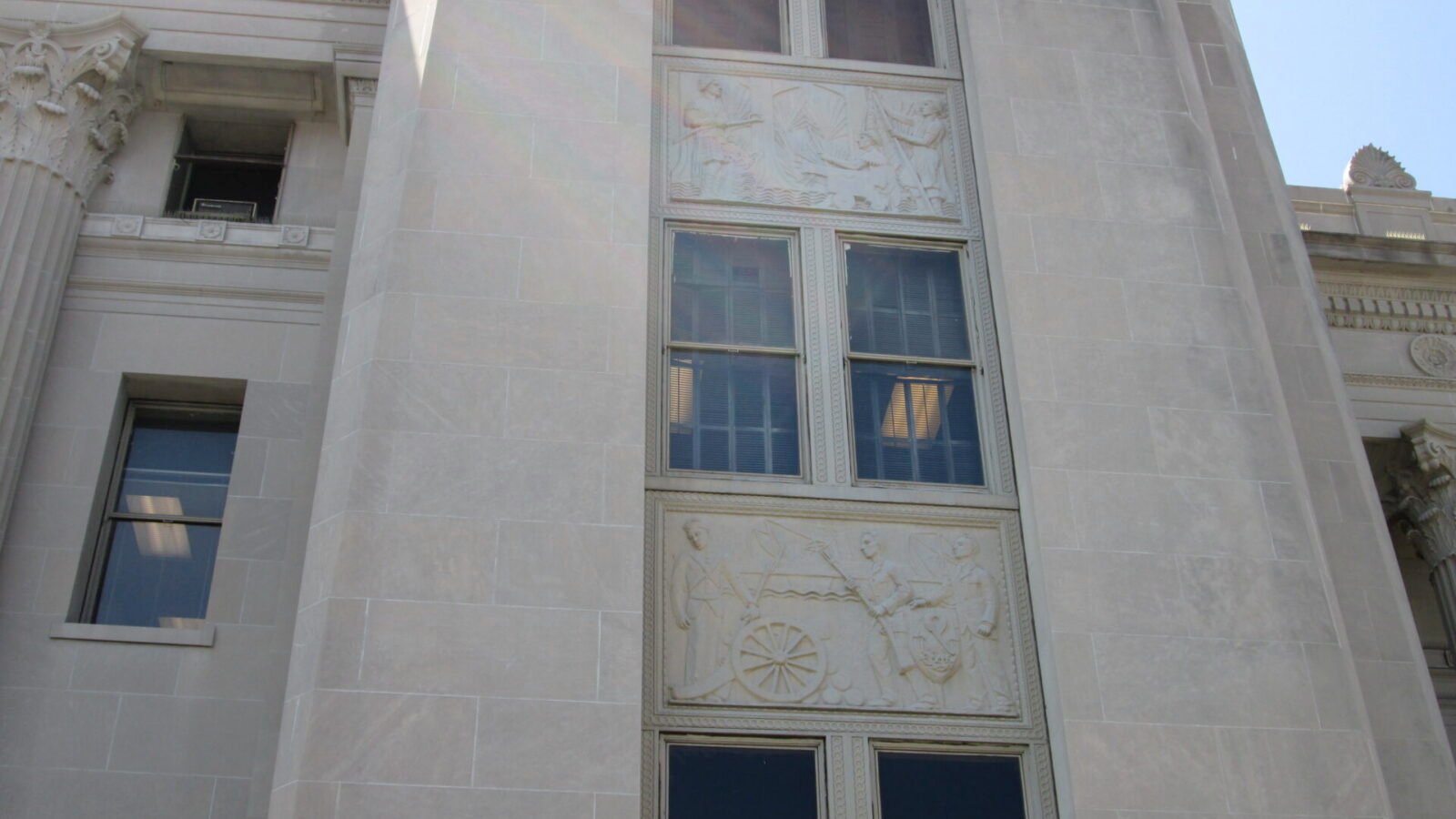
Featured image credit: Orleans Parish courthouse exterior photographed by Infrogmation of New Orleans, CC BY-SA 3.0. Archival contextual image.