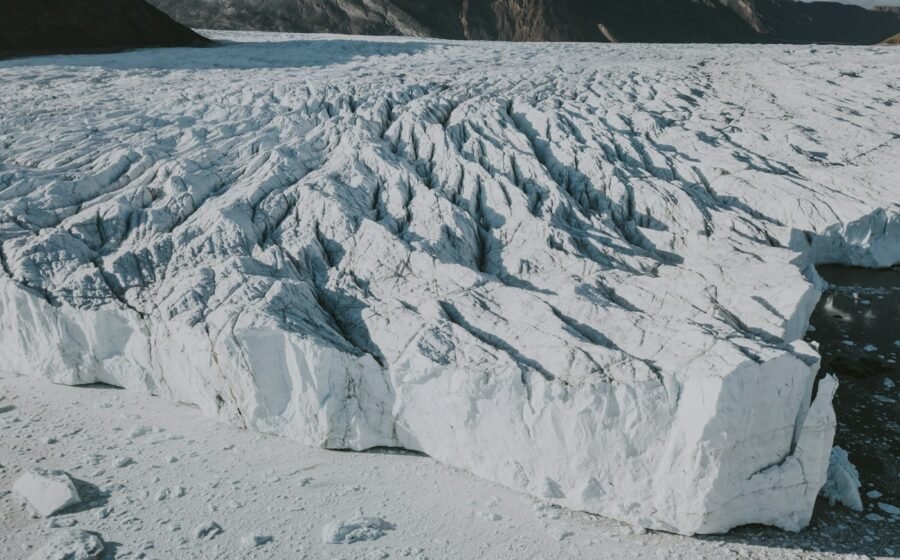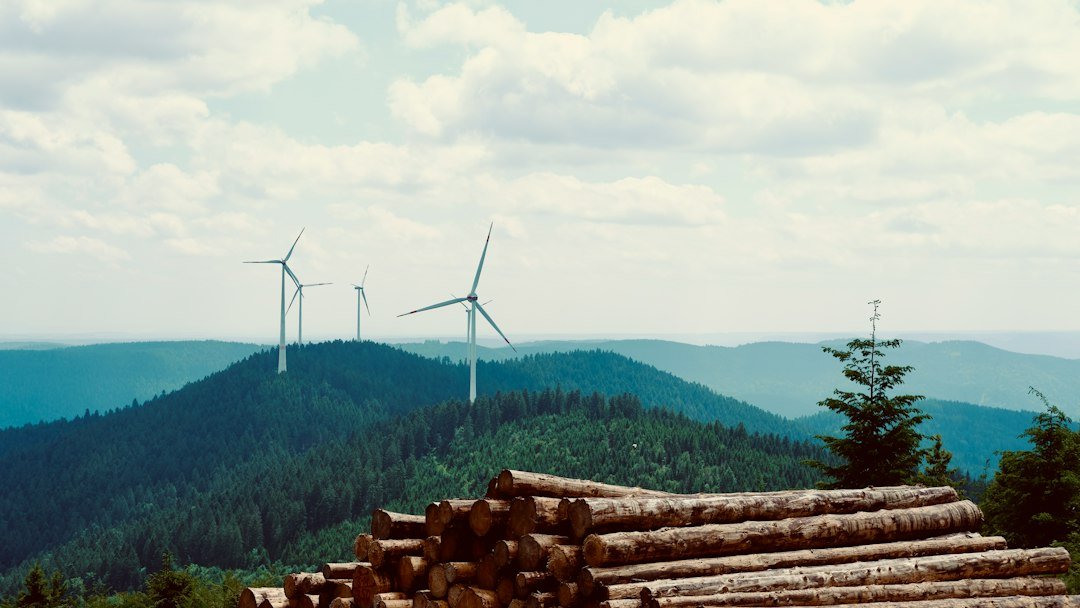
Google’s planned data center in rural Finland has become the subject of a criminal investigation after an estimated 250,000 trees were cleared at Muhos before required environmental assessments were completed. Regulators are also scrutinizing drainage, water quality and a second site — raising urgent questions about who pays the environmental price of the artificial-intelligence boom.
Apep Bar | Investigative Report | October 29, 2026
Watch: The Guardian video: Google illegally fells 250,000 trees for a data centre in Finland. Original investigation: Miranda Bryant’s October 22 field report for The Guardian.
A Forest Vanished Before the Questions Were Answered
In the countryside surrounding Muhos, northern Finland, a planned Google data center has already changed the landscape. Where hundreds of thousands of trees once stood, aerial images now show exposed earth, machinery tracks, disturbed soil and drainage channels. According to reporting by Guardian Nordic correspondent Miranda Bryant, the cleared expanse covers 330 hectares — roughly 815 acres — and had contained an estimated 250,000 trees. The number of trees is an estimate, not a completed stem-by-stem inventory.
The investigation published on October 22 described a site roughly 400 meters from the Oulujoki River, or Oulu River. Residents interviewed by the newspaper said muddy water was flowing toward waterways linked to the river. Their observations warrant investigation; they are not, by themselves, proof of measured contamination. What is already documented, however, is that regulators found the environmental review unfinished when large-scale land clearing had taken place. Read The Guardian’s original field investigation.
What began as a dispute over a rapidly changing forest has now become an active criminal investigation. As of October 29, 2026, Finnish police are examining suspected environmental damage connected with the project. The distinction matters: the destruction of the forest is extensively documented; the precise criminal responsibility, if any, has not been decided.
Breaking Update: Finnish Police Open an Environmental-Crime Investigation
On October 29, Finnish public broadcaster Yle reported that the Oulu Police Department had opened a preliminary investigation into activities at the Muhos site after receiving a request from the national Supervisory Agency. Police said they had received five investigation requests concerning the area and were examining them together.
The suspected offense is categorized as environmental damage. Police pointed to apparent irregularities and deficiencies involving drainage and water management at the project, which is operated through Google’s local subsidiary Tuike Finland Oy. They said other possible offenses might become clearer during the investigation, and that the inquiry could continue through 2027. An investigation is not an indictment or a conviction; its outcome remains unknown. Read Yle’s October 29 police report and The Guardian’s same-day follow-up.
Why does this matter? Until now, much of the debate had concerned administrative compliance: what preparation could lawfully proceed before review was finished. Police involvement adds the possibility of criminal scrutiny, particularly around what happened to soil, water and drainage. It does not eliminate the need for proof, nor does it turn every criticism of the project into an established offense.
Two Sites, Hundreds of Thousands of Trees
Muhos is not the only affected site. At Otanmäki in the Kajaani area, roughly 100 kilometers to the southeast, the same broader data-center development has involved another large clearcut. Ecologist Mari Annala of the Finnish Association for Nature Conservation estimated that about 150,000 trees were removed there.
Taken together, the two estimates suggest as many as 400,000 trees felled across the sites. This is a conservation expert’s estimate, not an official audited total. Finnish public broadcaster Yle reported that around 330 hectares had been cleared at Muhos and just under 200 hectares at Kajaani. The figures illustrate the scope but should not be mistaken for identical measurements of tree density, forest age, habitat quality or carbon storage. Yle’s report on the scale of clearances and Google’s response.
The question is not whether Finland has forests elsewhere. It does. The question is whether the removal of these particular forests occurred under the environmental rules meant to assess the local costs before a project becomes irreversible.
What the Environmental Assessment Was Supposed to Do
Finland’s environmental impact assessment process, known by the Finnish abbreviation YVA, is designed to identify significant consequences early enough for public authorities and project planners to consider alternatives, mitigation and the possibility of avoiding harm. This is more than an administrative box to tick after construction begins.
On October 6, 2026, Finland’s Licensing and Supervision Authority, Lupa- ja valvontavirasto (LVV), instructed Tuike Finland to halt environmentally transformative preparations at Muhos and Kajaani-Otanmäki immediately and, at the latest, by October 23. The agency referenced section 32(2) of the Environmental Impact Assessment Act. Its notice listed removal of trees and topsoil, excavation, quarrying, soil relocation, drainage alterations, and building work roads and storage areas among activities that should not continue before the assessment processes concluded. Planning, measurements and minor reversible work were distinguished from destructive land preparation. Read the regulator’s original October 6 notice.
The reasoning is central to the story: if a project’s most dramatic environmental effects happen before the assessment is finished, alternative locations and construction methods can no longer be evaluated on equal terms. Asking whether a forest should be removed after it has been removed changes the meaning of the exercise. The regulator’s intervention substantiates a serious compliance dispute, but it should not be confused with a completed criminal finding.
Nine Kilometers of Ditches — and the Risk Beneath the Ground
The later findings made the matter more serious. In a detailed October 22 regulatory notice, LVV said Tuike Finland’s Muhos drainage notification described approximately nine kilometers of new ditches, most of which had already been constructed. The authority said the notice should have been submitted at least 60 days before the work began. It concluded that a separate permit under Finland’s Water Act was required for the proposed drainage activity. Read the October 22 regulatory findings.
LVV also raised concerns about black shale and acid-generating soils in the area. Disturbing sulfide-bearing ground can expose it to oxygen, potentially causing acidification and mobilizing metals. Runoff can also carry suspended sediment and nutrients, especially during rain or snowmelt. The authority said monitoring results supplied by the company already showed changes suggestive of acidification. That is an indication warranting investigation, not a declaration that a specific river has been permanently poisoned.
The authority did not consider the measures described in the company’s submitted drainage plan sufficient to demonstrate that all significant effects could be prevented or managed. It demanded a more detailed water-management plan by November 5, 2026, including a schedule, structures, independent water monitoring, and attention to heavy rain, snowmelt, and acidic materials. Failure to provide adequate measures could lead to administrative enforcement and a conditional fine.
LVV additionally requested information about a protected moor frog breeding or resting site at Muhos after the land alterations. That request indicates another matter requiring assessment; it does not establish that the frogs were killed. The consequences for water, soil and wildlife need independent monitoring, not merely public assurances.
Google Apologizes — but Disputes Negligence
Google’s Finland country manager, Antti Järvinen, publicly apologized in mid-October. He told Yle that the company believed its decisions reflected the best understanding of Finnish law available at the time. He rejected allegations that the company had acted negligently or deliberately rushed to bypass environmental review, and said the project had proceeded in consultation with local authorities. Read Järvinen’s statements reported by Yle.
Google’s public position, as reported by The Guardian, was that it had sought to meet or exceed applicable Finnish zoning, environmental and safety standards throughout its 15 years operating in the country. It said it suspended preparatory work at the two sites after receiving the October 6 notices and confirmed that position to the regulator on October 14. The authority’s October 22 announcement also acknowledged that confirmation.
These statements matter. The record does not establish a hidden plan by Google management to break environmental law. It does establish that major preparatory changes to the land preceded completion of required environmental procedures and that the regulator intervened. The unresolved legal questions include who authorized the timing of the work, what approvals or understandings were relied upon, and whether any specific conduct violated criminal statutes.
Google has said it intends to plant trees across approximately 130 hectares at Muhos. Ecologists question whether that compensates for the loss. Newly planted trees on part of a site are not the same ecological asset as an existing forest, with its established soils, water flows, roots, plant communities and wildlife habitats.
What the Forest Did Before It Became a Building Site
It is tempting to reduce a forest to an inventory of trunks: 250,000 trees standing, 250,000 trees removed, a promise to plant some elsewhere. But an ecosystem does more than hold wood. Roots bind soil; vegetation slows runoff and evaporation; forest floors support fungi and invertebrates; and connected habitat supports birds and mammals. How much these functions changed at Muhos requires site-specific ecological measurements, but complete clearing and removal of topsoil plainly alter their physical foundation.
Mari Annala, the ecologist interviewed by The Guardian, pointed to the sheer scale of the disruption visible in drone footage. In Otanmäki, residents told the newspaper they had noticed wildlife movement, noise and discoloration of local water after the work. One resident said wolves had appeared closer to the village; that report is a resident observation, not independently demonstrated proof that the project caused a particular change in wolf behavior.
The distinction between observation and verified effect should not be used to dismiss local concerns. It should guide what authorities measure next: before-and-after water chemistry, sediment, drainage changes, habitat loss, noise exposure and whether promised restoration survives beyond a press release.
Why Finland Is Becoming a Magnet for the AI Industry
Finland offers a combination that global data-center operators find attractive: comparatively cool weather, a stable operating environment, access to electricity, available land and opportunities to build large facilities. Cooler ambient temperatures can reduce some cooling demands, although total energy needs depend on the hardware, facility design, and workload. Data centers serve many digital functions; the expansion in AI workloads is one major source of pressure, not the only reason for every project.
According to The Guardian, approximately 145 data-center proposals were in some stage of planning in Finland at the time of the October reporting. These are proposals in varying stages, not 145 completed facilities. Google has announced a €13 billion investment program connected with its Finnish infrastructure expansion. The company described the commitment as its largest European investment, according to reporting cited by Yle and The Guardian.
Prime Minister Petteri Orpo has welcomed the investment, arguing that the data economy can generate long-term advantages. Some local communities see potential property-tax revenue, construction contracts and work opportunities. Critics say that the direct number of permanent data-center jobs may be modest compared with the land and energy requirements, and that much of the profit from international cloud services can accrue outside Finland. Both sides deserve scrutiny through projected versus actual jobs, tax receipts, infrastructure costs and energy consumption.
Whose Electricity, Whose Water, Whose Benefit?
Data centers make the internet’s supposedly weightless activities physical. Servers require electricity; cooling systems require energy and, depending on design, may use water; buildings and substations consume materials and land. Additional demand can alter the planning requirements of an electricity grid. Whether it ultimately raises household prices at a particular location depends on grid conditions, new generation, tariffs, financing and regulatory decisions, and should not be assumed without supporting calculations.
Some of Finland’s power comes from low-carbon sources. That may improve the climate profile of a facility, but clean electricity does not excuse damaging land use or the failure to complete environmental reviews. A project can be comparatively low-carbon in operation while still imposing serious local ecological costs.
The important question is who receives which benefits and who bears which risks. A municipality might receive taxes and development work while households experience construction disruption or worry about water quality. A global operator might earn revenue from customers everywhere, while a local community lives next to the facility. Good public policy requires these trade-offs to be made visible before the bulldozers arrive.
The Public Backlash and the Question of Trust
The clearings provoked a broad reaction in a country where forests are central to livelihoods, recreation, ecology and national identity. The Guardian reported that more than 93,000 people had supported a petition calling for stronger data-center regulation and a fee intended to compensate affected communities. That figure is a reported snapshot, not necessarily today’s live count.
Hanna Halmeenpää of the Finnish Association for Nature Conservation criticized the scale and speed of Google’s actions and questioned how a project could proceed so far before the key environmental steps were complete. Other residents saw at least some economic promise in the new facilities, while expressing frustration at the loss of forest or uncertainty over the local returns.
The political question extends beyond Google. Should individual municipalities, keen to attract investment, negotiate projects of potentially national energy and environmental significance? Would a coordinated national process make environmental standards, grid planning and benefit-sharing more consistent? Advocates of central oversight believe local decision-makers may be under pressure to approve developments quickly; defenders of local control emphasize jobs, tax revenue and regional autonomy.
The coming debate should not be reduced to a choice between welcoming technology and preserving nature. It is about the sequence, standards and enforceability of decisions.
Could Replanting Fix the Damage?
Planting trees can help restore some ecological functions over time. But species selection, soil conditions, long-term survival, water management and land use determine the result. A stand of young saplings is not the immediate equivalent of a mature forest, and restoration cannot undo all consequences of removing topsoil or modifying drainage. The promised 130 hectares of planting should be evaluated against the cleared 330 hectares at Muhos, alongside the condition and location of the land actually restored.
There is also a legal distinction between remediation and permission. A company can undertake corrective work after a disputed activity, yet still face review of whether it complied with the law. Conversely, a regulatory or police investigation does not automatically establish what form of restoration or penalty is ultimately appropriate. The public needs a verifiable restoration plan, independent monitoring, and clear decisions by competent authorities.
The Questions Regulators and Google Still Need to Answer
Several concrete questions remain open. When did land clearing, ditching and topsoil removal begin relative to the assessment and permit milestones? What precisely did the company and municipal officials each believe was authorized? How will authorities determine the extent of damage to water bodies and habitat? What safeguards must be installed before further work is permitted? What portion of the site will be restored, on what timetable, and with which ecological goals?
The most immediate published regulatory deadline is November 5, 2026, for a detailed water-management plan and related explanations. The criminal investigation announced October 29 is a separate legal process and is not expected to be completed immediately. Any later conclusions should be reported as new developments rather than read back into the current record.
There is no need to invent a corporate conspiracy to recognize the gravity of a 330-hectare clearing carried out ahead of completed environmental review. The documents and physical changes already demand explanation.
The Price of Building the Future on Cleared Ground
AI may be sold as a future of frictionless answers and invisible computing. Data centers reveal the other side: enormous quantities of power, space, construction materials and permanent infrastructure. These costs are not automatically reasons to prohibit every project. They are reasons to insist on public accounting and enforceable safeguards before landscapes are transformed.
At Muhos, a forest is gone; the environmental assessment remains unfinished; the regulator has required work to stop and additional water protections; and police have begun examining suspected environmental damage. Google says it acted according to its understanding of the law and has agreed to cooperate. Those are the documented facts as of October 29, 2026.
The broader question is about precedent. If a project can change hundreds of hectares of land before the impact assessment is complete, does the review still function as a meaningful safeguard — or merely as paperwork filed after the forest has disappeared?
Question. Investigate. Reconsider.
Documents and Further Reading
- The Guardian video report
- The Guardian, October 22: Muhos and Otanmäki forest clearings
- The Guardian, October 29: criminal investigation
- Yle News, October 29: police inquiry
- Yle News, October 14: Google’s apology and response
- Finnish Licensing and Supervision Authority, October 6 order
- Finnish Licensing and Supervision Authority, October 22 drainage and enforcement notice
Editor’s note: The 250,000-tree and 150,000-tree counts are estimates attributed to ecological reporting, not audited inventories. The police inquiry is preliminary and does not establish criminal guilt. Claims about specific wildlife displacement or polluted water are attributed to residents unless supported by official test results; regulator-identified monitoring concerns are identified separately. This article synthesizes independent reporting and official Finnish notices, and does not claim original on-site reporting by Apep Bar.