GEOPOLITICS / INVESTIGATIONS — OCTOBER 28, 2026. President Donald Trump’s Greenland policy has generated claims about purchasing, occupying or controlling the island. The September 2026 U.S.–Denmark–Greenland defense agreement points to a more complicated story. It preserves existing sovereignty while providing a framework for expanded U.S. defense access and strategic continuity in the Arctic. The question is not whether Greenland has been sold. It has not. It is how much durable geopolitical influence a state can secure through military agreements without changing a border.
An agreement, not a sale
The September 22, 2026 agreement among the United States, Denmark and Greenland supplements the 1951 Defense of Greenland framework, as amended in 2004. It does not transfer Greenland’s sovereignty or give the United States title to the island. Its importance lies in what can happen without a formal territorial transfer: a wider American military footprint, rules governing facilities and operations, and provisions that could outlast Greenland’s current constitutional relationship with Denmark. The text recognizes Danish sovereignty and Greenlandic self-determination.
Why Washington wants the Arctic
Greenland occupies a strategically significant position between North America, the Arctic Ocean and the North Atlantic. Military planners value the region for missile warning, space surveillance, maritime and air approaches, communications and potential Arctic transit routes. Interest does not automatically translate into the ability to build everywhere. Weather, ice, distance, infrastructure and local politics impose major constraints on operations and construction.
The historical foundation: the 1951 defense agreement
The United States and Denmark established a Cold War framework permitting U.S. defense activities in Greenland in 1951. That arrangement underpinned the American presence at what is now Pituffik Space Base. A 2004 update acknowledged Greenland’s evolving autonomy and created additional consultation mechanisms. The 2026 document is a supplement to an existing legal relationship, not the first treaty permitting U.S. military activity on Greenlandic territory.
Two additional places: Narsarsuaq and Mestersvig
The new text identifies two additional defense areas at Narsarsuaq and Mestersvig, alongside the existing American facility at Pituffik. Their inclusion is important because geography matters: a network of separate operating locations can potentially enable logistics, air movement, monitoring and access across a much larger part of Greenland. A designated defense area is not proof that a fully built military base already exists there, nor that every contemplated activity has received all operational approvals.
What the access provisions really change
The agreement describes rights and procedures involving designated defense areas, U.S. forces and associated activities. Readers should distinguish access for defined security purposes from ownership of Greenlandic land. The practical consequences depend on implementation, budgets, infrastructure work, environmental requirements and the relevant consultation arrangements. Broader military freedom can be strategically significant even without a change in the flag over the territory.
The issue of command, jurisdiction and local oversight
Military agreements are about much more than runways. They allocate responsibilities for personnel, installations, security and the relationship between U.S. operations and local authorities. For Greenlandic residents, the relevant questions include transparency, meaningful consultation, environmental remediation, emergency procedures, and how disputes will be handled. Any claim that the United States exercises unlimited jurisdiction across all of Greenland would go beyond the treaty’s defined provisions.
Foreign investment and national-security influence
The document also addresses national-security concerns surrounding sensitive foreign investment and strategically relevant projects. In geopolitical terms, this reflects concern that infrastructure, ports, communications and resource-related developments could have security consequences. But an investment-screening provision is not a general American license to control Greenland’s entire economy or mineral wealth. Its scope must be read according to the treaty and Greenlandic and Danish law.
Minerals, shipping and the temptation to overstate the deal
Greenland has attracted attention for mineral resources, including materials relevant to energy and advanced manufacturing. Melting ice and changes in Arctic transportation also influence long-term planning, though new routes face severe physical and commercial obstacles. Those realities make strategic access valuable. They do not establish that this defense agreement automatically conveys mining leases, exclusive commercial rights or ownership of natural resources to Washington.
What Greenland’s self-determination means here
Greenland has extensive self-government within the Kingdom of Denmark and an established political debate over independence. The people living there are not incidental to any Arctic strategy: they have political institutions and a claim to decide their future. A central point of the 2026 agreement is its treatment of continuity if Greenland becomes independent. That could preserve defense arrangements through a constitutional transition, but it should not be described as a completed independence decision or a waiver of Greenlandic agency.
A clause designed to outlast today’s political borders
One of the agreement’s most consequential features is that the parties contemplate its continuing application if Greenland becomes an independent state. In effect, a security relationship could be planned to survive a major change in sovereignty. This is not the same as predicting whether or when independence will occur. It shows that American planners are negotiating for strategic continuity, not merely reacting to a temporary political headline.
The overlooked legal detail: when does it take effect?
The document is dated September 22, 2026, but its Article XII addresses entry into force after completion of necessary Danish and Greenlandic parliamentary procedures and formal notification. Signing and entry into force are legally different steps. As of this article’s preparation, a completed notification establishing the agreement’s operative date had not been independently verified. The planned rights should therefore be described as agreement provisions, not all as currently activated operations.
Golden Dome and the missile-defense question
Commentators have connected Arctic defense access to emerging missile-warning and defense proposals, including the U.S. Golden Dome concept. Greenland’s location could make it relevant to sensing and tracking, but the publicly available agreement does not by itself establish a specific deployed Golden Dome installation at Narsarsuaq or Mestersvig, an approved construction budget, or a detailed deployment timeline. Geographic logic is not equivalent to an announced procurement or completed facility.
What the viral video can and cannot establish
The reader supplied a YouTube video titled “Trump’s Greenland Deal Is Bigger Than You Might Think.” The video’s full spoken transcript was not independently retrievable. Its premise can be assessed through the actual agreement: the changes are strategically significant even without territorial annexation. But claims about secret mineral transfers, immediate new bases, exclusive U.S. ownership or a completed independence arrangement require documentation that the supplied treaty text does not provide.
The Danish and Greenlandic perspectives
Washington may view the agreement as additional defense capacity in a changing Arctic. Denmark has responsibilities as the sovereign state and a NATO ally, while Greenland’s government and population must weigh local consent, infrastructure, environment and long-term autonomy. Different parties can support common defense while disagreeing about the concentration of military power or outside economic influence. Those concerns should be presented as distinct perspectives, not collapsed into a story about one nation’s leader acquiring an island.
A more precise definition of ‘bigger than you think’
The most durable significance may be legal and logistical rather than theatrical: identifying more operating locations, updating access rights, considering security-sensitive investments, and preparing a defense relationship that can continue even if Greenland’s constitutional status changes. These are potentially far-reaching changes to Arctic posture. Whether they produce new installations, increased deployments or measurable changes in strategic capability will be determined by future implementation and public decisions.
Apep Bar’s question
If a government can secure long-term military access and strategic influence without formally acquiring territory, is the more important question who owns the map—or who controls what can happen at the places marked on it?
Official agreement, video and further sources
The White House: September 22, 2026 U.S.–Denmark–Greenland supplementary defense agreement · Reader-supplied YouTube video: Trump’s Greenland Deal Is Bigger Than You Might Think · U.S. Space Force: defense and space operations background · Government of Greenland: official government information · Danish Ministry of Foreign Affairs: foreign and security policy information.
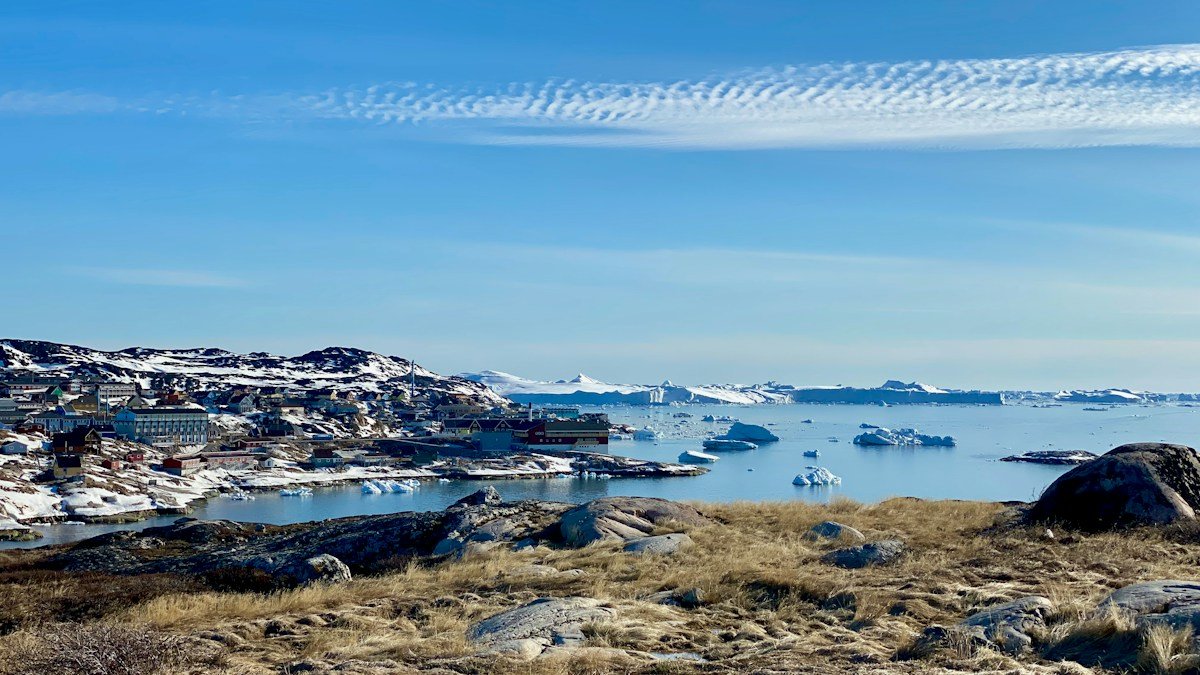
Editorial methodology: This article relies principally on the actual September 2026 agreement. The linked video could not be fully transcribed; no quotation from its narration is represented as verified. Treaty provisions are distinguished from completed implementation, and the date of formal entry into force was not independently confirmed. The unique featured photograph depicts a Greenlandic coastal landscape, not a military base or signing event. Image credit: 66 north / Unsplash.