European Power Investigations — Part 4 of 9 | Apep Bar | October 27, 2026
How did two maritime republics turn commercial exchange into political power? Venice and Genoa offer a documented answer: their ruling institutions regulated trade, their merchants organized long-distance ventures, and their creditors helped finance public obligations. Surviving government decisions, notarial contracts, election registers, and bank ledgers show how those arrangements worked. They do not establish the popular allegation that an uninterrupted secret circle of families has directed world events for centuries.
Venice: merchant wealth and the machinery of government
Venice was not simply a collection of private traders. Its long-lived republic developed public offices that regulated navigation, taxation, customs, diplomatic relationships, and the economic interests of the lagoon and its overseas possessions. Wealthy patrician households could combine commercial opportunity with public office, but those positions were embedded in specific councils, elections, and institutional rules.
The surviving records are unusually useful. The Rulers of Venice, 1332–1524 research database draws on original election registers, especially the Segretario alle Voci, and includes more than 70,000 records concerning officeholding and elections. That evidence lets researchers ask which individuals held which offices, when, and how often. It does not by itself prove that everyone bearing a surname acted as a unified political bloc.
The Archivio di Stato di Venezia identifies Senate deliberations including the Mar (maritime affairs), Terra, Zecca (mint), and records of officials supervising banks among its consultable archival series. These are primary institutional records: the paper trail of decisions over commerce, finance, and state administration.
Trade policy was public power
The Venetian Senate established a specialized commercial body, the Cinque Savi alla Mercanzia, in the early sixteenth century. The surviving archival collection includes decrees, correspondence, consular reports, customs and port matters, insurance-related material, and records concerning foreign merchants. Its contents show how a state could shape markets through permits, taxes, diplomatic protection, and regulation rather than merely through private ownership.
The detailed archival description in the Western Sephardic Diaspora Roadmap’s inventory of the Cinque Savi alla Mercanzia points to individual primary records, including registro 137, folios 96v–97v, concerning a 1583 petition by merchant Daniel Rodriga, and registro 138, folio 1–1v, concerning his 1587 proposals for maritime trade. These are examples of documented commercial negotiation, not evidence that one ethnic or religious community secretly controlled the republic. Venice’s commercial world included people from multiple regions and religions, whose legal positions and opportunities were not equal.
For direct consultation, the Venice State Archive’s moreveneto archival portal supplies descriptions, inventories, and some digitized documentary units. The existence of an archive entry should not be confused with having independently examined every underlying manuscript.
Genoa: from trading capital to public creditors
Across the Italian peninsula, Genoa developed a distinctive relationship between merchant capital, state borrowing, and public administration. The best documented institution is the Casa delle Compere e dei Banchi di San Giorgio, formed in 1407 as part of the reorganization of Genoese public debt. Its public banking activity began in 1408.
The State Archive of Genoa identifies the first ledger of the Banco di San Giorgio as AS GE, San Giorgio, Bancorum, 17,07204 (1408). It describes customer accounts and double-entry bookkeeping: deposits, withdrawals, transfers, and the bank’s cash account. This is unusually concrete primary evidence for how finance operated. The archive reports more than 40,000 surviving documentary units from the institution’s history.
San Giorgio was not merely a modern-style commercial bank. It administered public debt and taxation and at times exercised territorial and governmental responsibilities. The Museums of Genoa’s description of the first ledger and the State Archive’s historical overview document this overlap of creditor rights and public authority, including records relating to Corsica, customs, and other territories.
That overlap raises a real political question: what happens when public authorities rely on organized creditors who can acquire administrative powers? Historian Yves Winter examines the problem through Machiavelli’s discussion of San Giorgio in “A Government of Creditors” (Polity, 2022). This is a scholarly interpretation of documented institutions, not proof of a clandestine command structure.
Merchant elites were not a single trans-European family council
Venetian and Genoese elites competed as well as collaborated. Families, firms, councils, and lenders could have overlapping interests, but those interests shifted with wars, trading routes, succession disputes, public debts, and changing alliances. An investigation into any particular family requires dated contracts, office records, property transfers, correspondence, or genealogical documents—not just a surname appearing in a modern list.
Two useful kinds of evidence illustrate the difference. Venice’s election registers can establish a named person’s public office. Genoa’s 1408 ledger can establish an account or transaction recorded by the bank. Neither automatically proves a secret agreement among unrelated descendants centuries later. Claims about an all-powerful “thirteen-family” structure, Masonic direction of medieval trade, or an unbroken Illuminati command chain require specific documentary links; the records cited here do not supply them. The Bavarian Illuminati arose much later, in 1776, and should not be projected backward onto medieval institutions.
What the evidence establishes—and what remains open
Documented: Venice maintained formal institutions overseeing maritime trade and public office; Genoa’s San Giorgio combined financial operations with elements of public administration; primary registers and ledgers survive for investigation.
Open to case-by-case research: Which named merchants benefited from particular decrees? How were financial interests represented in elected offices? What were the terms of individual loans and contracts? The archival series make these questions testable.
Not established: A secret, continuous governing hierarchy of merchant bloodlines controlling Europe or the world. Such a claim cannot be inferred from the fact that historical elites possessed wealth and influence.
The larger lesson is more important than a mysterious family tree: political power can be traced through institutions that allocate credit, collect taxes, control shipping, and distribute offices. Those relationships are complex, consequential, and often visible in the surviving record.
Primary documents and research sources
- Archivio di Stato di Genova, San Giorgio, Bancorum, 17,07204, first ledger (1408), described in the State Archive’s documentary exhibit.
- Archivio di Stato di Venezia, Senato, Deliberazioni, Mar and related institutional series, listed by the State Archive.
- Archivio di Stato di Venezia, Cinque Savi alla Mercanzia, reg. 137, fols. 96v–97v (1583), and reg. 138, fols. 1–1v (1587), as identified in the archival inventory.
- Segretario alle Voci and Venetian council election registers, edited and indexed in The Rulers of Venice, 1332–1524.
- Archivio di Stato di Genova, Casa di San Giorgio archival inventory and overview of Genoese notarial and government records.
- Secondary scholarship: Giuseppe Felloni, “Genova e il capitalismo finanziario dalle origini all’apogeo” (2016); Yves Winter, “A Government of Creditors” (2022).
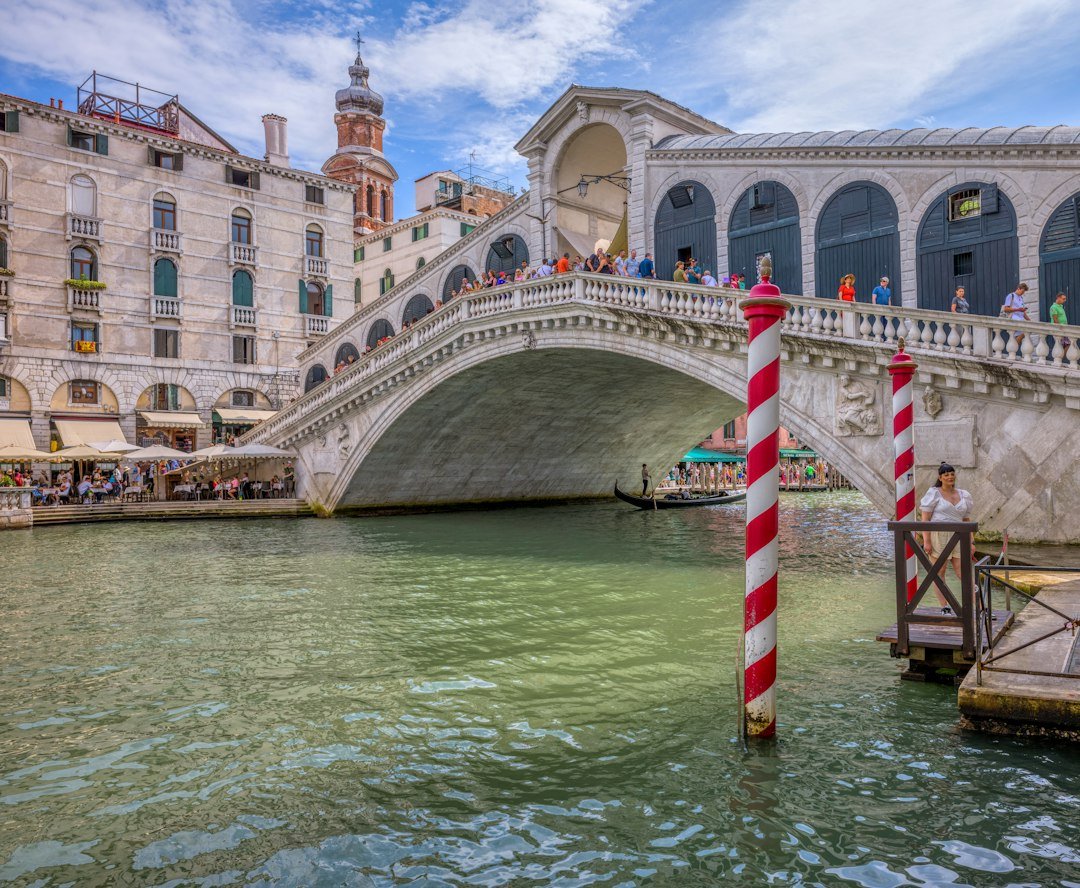
Research note: Archival catalogues and institutional descriptions were consulted for this installment; the article does not claim original paleographic examination of each manuscript. Featured image: contemporary Venice photograph by Michael Heise via Unsplash, used illustratively, not as a period document.
Next in the series: Part 5 — European dynasties, the Fugger financiers, and the Habsburgs: the documentary record of loans, imperial politics, and influence.