APEP BAR | November 20, 2026. OPINION / ANALYSIS. When government purchases face-search technology, public trust should not be an optional add-on. Harris County’s November 19 removal of a proposed Clearview AI agreement from its agenda is an opportunity to settle safeguards before procurement, not after the first mistaken identification.
What actually changed
Houston-area ABC13 reported that commissioners did not proceed with the planned discussion of a Clearview AI agreement. The Sheriff’s Office said the item was removed because it was not ready for consideration, and did not say whether it would return. That is a postponement, not proof of cancellation or misconduct.
The central danger
Face-matching systems generate leads, not courtroom-grade proof of an identity. False matches, particularly when combined with weak investigative practices, can expose people to intrusive questioning or wrongful arrest. Publicly scraped images introduce separate consent and surveillance concerns.
A fair standard for law enforcement
Investigators may argue the tool can help identify suspects in genuine crimes. A responsible policy should specify permissible cases, human review, independent accuracy testing, retention limits, auditing and a route to challenge harmful errors. The burden should be on the agency to document benefit and proportionality.
Our position
Procurement should follow enforceable rules rather than become the moment officials begin designing them. Would county residents agree to a vast face-search database if the proposed guardrails were displayed on the same agenda?
Sources and documentation
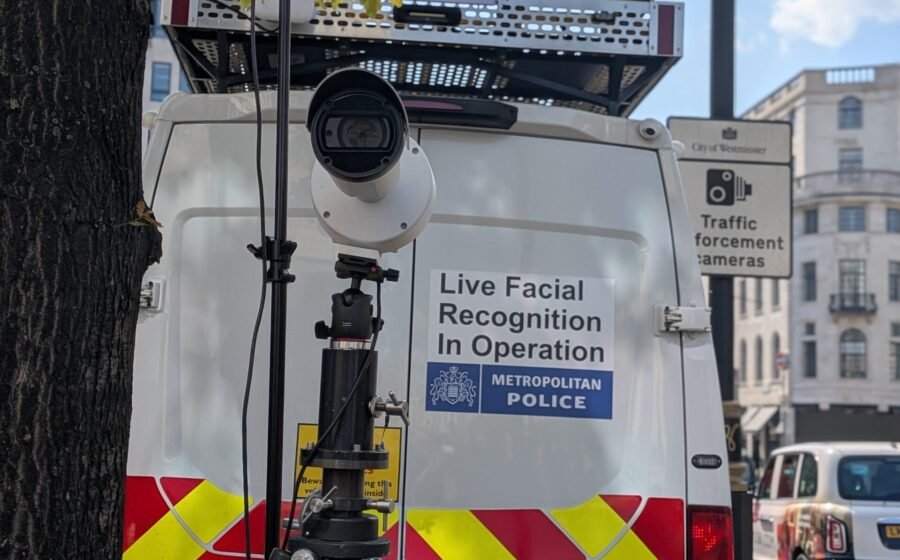
Featured image: actual U.S. airport biometric camera installation, used as an example of facial-recognition equipment. It is not a photo of Clearview’s software or Harris County’s proposed system. Original attribution and licensing details are retained in the WordPress media library.