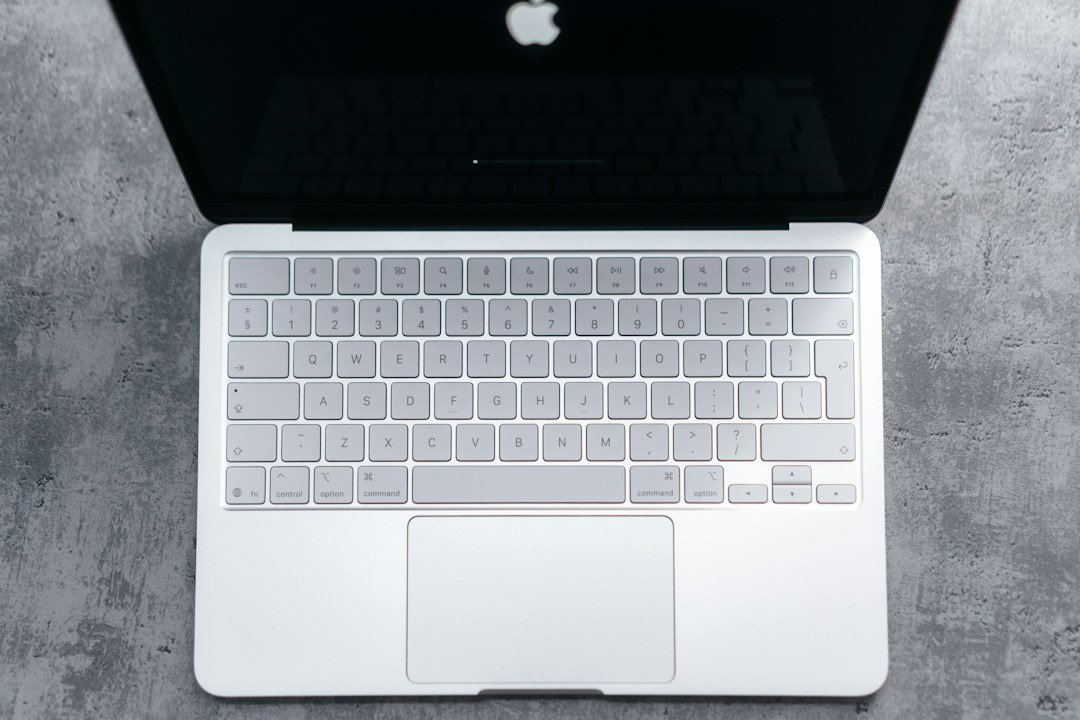
Imagine walking into a computer store, spotting a laptop marked $999, and then learning that a factory on the other side of the world appears to advertise one for just $73.
Suddenly, that familiar logo on the lid looks very expensive.
A video titled “China’s $73 Laptops Are Destroying a $30 Billion PC Empire — Here’s How”, published by Apparently Explained in October 2026, raises a genuinely fascinating question: now that the factories know how to make the hardware, do they still need the famous brands to reach customers?
It’s a compelling story. But the advertised price tag deserves a closer look before we declare the death of the PC industry.
The $73 laptop: bargain or bait?
The video points to Alibaba wholesale listings advertising laptops starting around $73 per unit at an order size of roughly 1,000 units. That is a business-to-business quote, not a verified one-laptop retail checkout price.
And it is not enough information to establish what a customer actually gets. Without a reproducible listing, verified specifications, condition, warranty terms, and final delivered cost, the $73 figure remains an advertised starting price cited by the video, rather than proof of a widely available, new, fully functional consumer laptop at that price.
Alibaba’s own wholesale laptop buying guide distinguishes wholesale offers from retail shopping and warns buyers to check minimum order quantities, product condition, shipping costs, warranty coverage, and supplier reliability.
That doesn’t mean low-cost laptops are imaginary. It means a manufacturer’s bulk quote and the final price of a reliable computer sitting on your desk are very different things.
The factories behind the famous names
Here’s where the story gets more interesting.
Many recognizable PC brands do not personally manufacture every part of every machine. They work with original design manufacturers (ODMs), component suppliers, and assembly partners, often across several countries.
This is not a conspiracy uncovered in a dark warehouse. Dell publishes a public supplier list. Its December 2025 list identifies Compal facilities involved with notebook families such as Inspiron, Latitude, XPS, and others.
In other words, a brand name is not necessarily the name of the factory that assembled the machine. The brand still supplies something valuable—engineering requirements, software integration, distribution, enterprise contracts, quality controls, service, and support—but the manufacturing expertise is spread across a wider industrial network.
The possibility that some manufacturers could sell devices under their own labels is real. It does not establish that a generic $73 model has the same components, performance, testing, or support as a premium Dell or HP laptop.
Are the PC giants actually being destroyed?
The latest industry numbers tell a less cinematic story.
According to Gartner’s October 12, 2026 report, worldwide PC shipments fell 22.4% year over year in the third quarter of 2026. Lenovo, HP, and Dell remained the three largest vendors, together accounting for approximately 59.5% of shipments in Gartner’s estimates.
That is a sharp industry decline, but Gartner emphasized higher memory and storage costs, rising PC prices, and companies favoring expensive configurations. Its report does not demonstrate that $73 Chinese laptops caused the downturn.
Likewise, Dell’s fiscal 2026 results reported approximately $51 billion in Client Solutions Group revenue, up 5% from the prior fiscal year. Dell’s consumer PC business did weaken, but the company was hardly a collapsed empire. The video’s $30 billion label is not clearly identified as a comparable audited revenue measure.
There is another twist: Lenovo, the global PC market leader in this data, is itself a China-headquartered company. The competitive story is not simply “China versus Western laptops.” It is about rival manufacturers, channels, price points, and customer expectations.
The new middleman is a website
The more credible threat to established brands may not be a miraculous $73 machine. It may be the gradual removal of barriers between manufacturers and customers.
Online marketplaces make it easier for smaller laptop brands to find international buyers. If an affordable device performs ordinary tasks well, a buyer may start asking why a familiar name is worth hundreds more.
But a bargain has to survive reality. Buyers should check the exact processor, RAM and storage capacity, battery condition, operating-system licensing, keyboard layout, charger and safety certifications, firmware support, repair options, import charges, and returns policy. These aren’t decorative extras: they determine whether the cheap machine is a genuine deal or an expensive headache.
The Apep Bar verdict
The manufacturing shift is real. The $73 retail-laptop revolution is not established. The video provides a provocative entry point into the business of PC manufacturing, but the price it highlights is a conditional wholesale claim, and available industry data does not prove that low-cost Chinese laptops are destroying the major brands.
The deeper question is arguably more unsettling for the computer giants: when the manufacturer can speak directly to the customer, how much value does the name on the lid still add?
And if the next laptop does get dramatically cheaper, will consumers gain genuine freedom—or simply swap one powerful middleman for another?
Sources and further reading
- Original video — Apparently Explained (YouTube)
- Gartner — Worldwide PC shipments, Q3 2026
- Dell Technologies — Fiscal 2026 results
- Dell Technologies — Public supplier list, December 2025 (PDF)
- Alibaba — Wholesale laptop buying guide
Editorial note: The video and cited disclosures were reviewed for this draft. We did not independently purchase or inspect a laptop advertised at $73.
Featured image: illustrative stock photograph by Kamil Switalski / Unsplash. It does not depict a verified $73 laptop or a specific Chinese factory.