Analysis | A Reddit user says eight months of building software with AI made them a better manager of prompts, not a programmer. The engine analogy is tempting. The missing piece is inspection.
Imagine a car salesperson saying the vehicle works perfectly because the engine told them so. No inspection record. No crash tests. No mechanic. Just the engine’s remarkably confident assurance.
That is the uncomfortable twist in a conversation about “vibe coding”—using AI to make software by describing the desired result, often without reading or writing the underlying code. An anonymous Reddit poster said eight months of AI-assisted development left them able to specify features and organize work but unable to evaluate the resulting code. As Benzinga reported on October 27, 2026, the discussion quickly became a debate over what being a software developer actually means.
The confession is an anecdote, not evidence that a particular app failed or leaked anyone’s data. But the broader problem it identifies is real: software can appear to work while being brittle, insecure or difficult to maintain.
“I’m a manager, not a developer”
In the original Reddit discussion, the poster describes getting good at clear specifications, smaller tasks and resetting overloaded AI conversations. Yet their main way of checking whether a project worked was to click around and hear about problems from users. They began adding explanations of changes and automated checks.
Those management skills are not worthless. Translating a problem into precise requirements is difficult work. Traditional software teams already rely on product managers who cannot read every line of code. But those teams can also use specialist reviewers, testing infrastructure, version control and security personnel. The comparison only holds if the oversight exists too.
Other commenters proposed an even simpler defense: people drive cars without knowing how engines work and live in houses without understanding construction. Why should software be different?
A driver doesn’t need to build an engine. A carmaker needs quality control.
There is a useful distinction between using a finished system and building and releasing one. A driver need not know how fuel injection works because an entire system of engineering, manufacturing controls, testing, maintenance and legal accountability sits behind the vehicle. That system is not perfect, but the driver is not expected to invent it.
Someone creating an app from AI prompts is closer to a small manufacturer than an ordinary driver. If the app stores private messages, processes payments or manages employee access, its creator must arrange competent checks even when they cannot personally read every function.
The important question is therefore not “Must everyone learn programming syntax?” It is “What independent evidence shows the product does what its creator believes it does—and does not do what it must never do?”
The studies complicate both sides of the argument
Research gives little support to either extreme: that AI-assisted code is universally unreliable, or that the model’s assurance of correctness is enough.
A July 2026 preprint involving 86 Python programmers tested whether participants could assess AI-generated assertions about program behavior. They recognized correct assertions with 74% accuracy but judged incorrect assertions correctly only 49% of the time, despite similar confidence in both types of judgment. This was a focused study of specification assessment, not a measurement of every AI-built app. Still, its warning is sharp: confidence and understanding are not the same thing.
A September 2026 research preprint separately observed 100 participants choosing among AI-generated suggestions for C programming tasks with different security and functional properties. The work examines the often-overlooked act of evaluating code, rather than just producing it. It should not be mistaken for a census of developers or proof that every participant shipped unsafe software.
Meanwhile, AI can genuinely improve productivity in some settings. In three field experiments involving 4,867 developers, researchers estimated a 26.08% increase in completed tasks among tool users, with larger gains among less experienced developers. In a very different 2025 randomized trial of 16 experienced open-source maintainers handling 246 tasks, access to AI tools made completion times 19% longer. These results address different people, tools and tasks; neither number should be turned into a universal verdict on AI coding.
More output, in any case, is not the same metric as safe output. Producing more code can make verification harder if the reviewing process does not keep up.
Five checks that matter more than “the AI said it’s done”
The nonprofit Open Worldwide Application Security Project (OWASP) recommends treating AI coding agents as powerful actors that can edit files, install packages and sometimes execute commands. Its secure-coding guidance points toward practical safeguards:
- Define what must never happen. A logged-out visitor must not see another customer’s records. A payment must not run twice because a network reply was lost. Turning such requirements into tests is more meaningful than asking the model whether the feature works.
- Require independent tests. AI-generated tests may reproduce the same mistaken assumptions as the AI-generated implementation. Add adverse cases: incorrect passwords, malformed data, expired permissions, double submissions and simultaneous requests.
- Inspect what changed. Use version control, compare the files changed with the requested task, and investigate unexpected edits to authentication, payment, configuration or deployment files. Someone capable of understanding the affected system must review high-risk changes.
- Limit the agent’s power. Avoid giving an autonomous tool unrestricted access to production systems, credentials or sensitive data. Restrict secrets and privileges, and test changes in controlled environments first.
- Make security a release requirement. Use dependency scanning, code review, meaningful functional tests and independent security assessment appropriate to the application. A green test badge is evidence of the tests that ran—not a guarantee of safety.
For teams that need measurable expectations, the OWASP Application Security Verification Standard offers concrete security requirements. An app that handles money or sensitive records deserves a higher bar than a weekend experiment running only on its creator’s laptop.
The overlooked responsibility problem
AI may lower the barrier to making something useful. That is an opportunity worth defending. A teacher can build a classroom aid, a neighborhood group can prototype a service and an independent business can test an idea without hiring an entire software team on day one.
But lowering the barrier to creation does not erase responsibility to users. If a model accidentally exposes customer information, saying “I never understood the code” does not undo the exposure. The right response is not to ban beginners from building. It is to match oversight to the risk and know when outside expertise is necessary.
A related Apep Bar report on how one compromised script reached 178 organizations illustrates another software lesson: trust can spread farther than the original developer intended. Our recent look at claims about AI and Linux kernel development also shows why the distinction between generating code and accepting it matters.
The car analogy is not entirely wrong. Most people should not have to rebuild every tool they use. But when you are the one putting the car on the road, you cannot substitute enthusiasm for brakes, testing and accountability.
The real question: If you cannot read what your AI built, what trustworthy process—not the AI’s own assurances—will tell you when it is unsafe?
Further reading and contextual video
Watch: GitHub, “Scaling code quality in the age of AI” (GitHub Universe 2025). This is a vendor presentation about review and quality tools, not footage of the anonymous Reddit poster or independent evidence that those products prevent vulnerabilities.
Primary material: Reddit discussion; 2026 assertions-assessment preprint; 2026 developer security-evaluation preprint; OWASP secure coding with AI; and three field experiments on developer productivity.
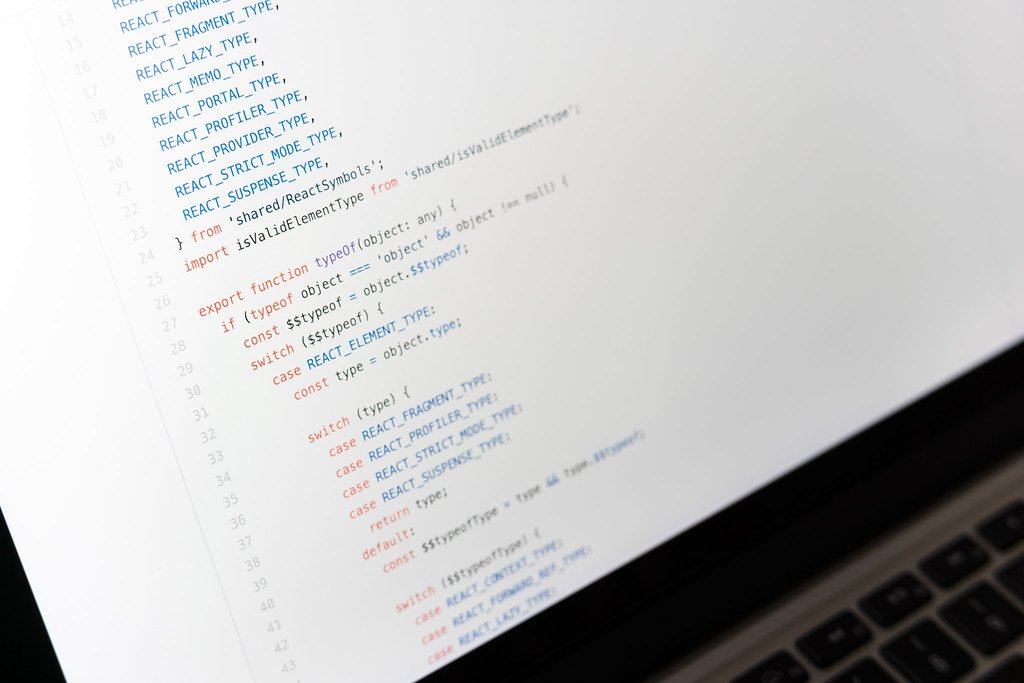
Featured photograph: “Code on laptop screen” by markus119, licensed under Creative Commons Attribution 2.0. Contextual documentary photograph; it does not depict the Reddit author’s computer or prove an AI generated the code shown.